
Discography Electronic

Discography Electronic
Explore Electronic music by 9000UK, driven by digital texture, rhythm, and experimental sound design. These tracks focus on movement, energy, and modern production.
Electronic Music by 9000UK
This Electronic discography by 9000UK explores synthesis, rhythm programming, and digital texture. The tracks vary in tempo and mood while maintaining a clean electronic identity.
Invictus Story
An epic anthem of resilience and legacy, portraying an unconquered spirit that endures adversity, transforms struggle into strength, and rises relentlessly toward victory.
“Invictus Story - The Unconquered Spirit” elevates the theme of resilience into a grand, almost mythic narrative, where the individual is portrayed as a warrior forged through adversity and defined by unbreakable will. The track builds on the concept of being “unconquered,” not as a moment of triumph, but as a continuous state of resistance, growth, and self-mastery.
The opening establishes identity immediately, with “Unconquered” acting as both declaration and foundation. In the first verse, external challenges are depicted through “storms” and “pressure,” representing forces designed to test and weaken resolve. Instead of collapse, the response is stability, as the “spirit held the line,” suggesting discipline and control under strain. The imagery of “steel inside” reinforces inner strength, while “every scar a mark of pride” reframes hardship as proof of endurance. The line “Invictus writes the name” introduces the idea of legacy, where identity is shaped through action and survival.
The pre-chorus, “Strength lives in the will,” condenses the song’s central message into a core principle. Power is internal, driven by determination rather than circumstance. This idea expands in the chorus, where “Invictus stand tall” becomes both command and identity. The repetition of standing through “rise and fall” highlights consistency across all conditions, while “spirit stronger than them all” positions resilience as the defining advantage. The phrase “Invictus conquer all” reinforces total dominance over adversity.
In the second verse, the narrative shifts toward sustained action and legacy. The refusal to surrender defines the mindset, while each struggle becomes fuel for growth. “Feeds the fire burning bright” suggests that adversity strengthens rather than weakens resolve. The idea that “victory within the hands” places responsibility and control firmly with the individual, while “rise again no matter cost” reinforces persistence as non-negotiable. The closing line, “nothing gained from staying lost,” challenges stagnation and promotes continuous forward movement.
The repetition of the chorus mirrors the enduring and unyielding nature of the message, reinforcing identity through consistency. Each return strengthens the sense of inevitability, where victory is the result of sustained resilience.
The outro, “Unconquered forever,” extends the concept beyond the immediate journey into permanence. It suggests that resilience becomes a defining trait that outlasts individual challenges, turning personal struggle into a lasting legacy.
Overall, the song blends motivational themes with epic, warrior-driven imagery to create a powerful statement about endurance, identity, and purpose. The tone is bold and commanding, encouraging a mindset where adversity is embraced as the force that shapes strength and defines greatness.
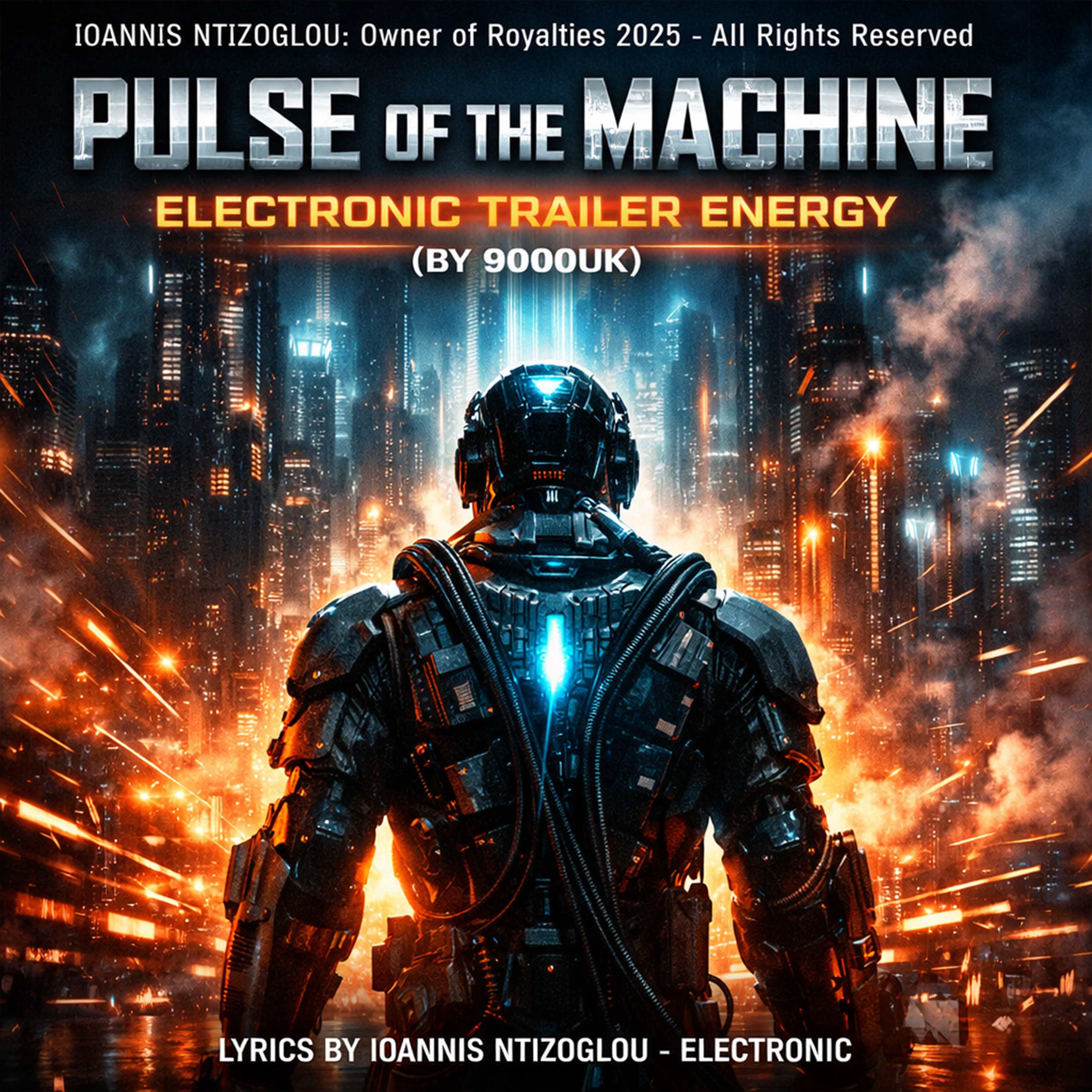
Pulse Of The Machine
A cinematic electronic anthem about rising energy, technological power, and unstoppable momentum driven by the rhythmic pulse of machines.
Pulse of the Machine - Electronic Trailer Energy captures the sensation of a world powered by speed, circuitry, and relentless forward motion. The song presents technology as a living force, where mechanical rhythm and human ambition merge into a single accelerating current. From the opening lines, cold lights and waking engines create a futuristic atmosphere where tension builds like a system powering up.
The first verse introduces a neon industrial landscape shaped by wires, circuits, and coded movement. The imagery of a steel sky breathing in neon fire suggests a city alive with electrical energy. Rhythm grows second by second, acting as the invisible engine that drives progress. When the signal calls, there is no hesitation. Movement becomes automatic, guided by a system that feels both mechanical and instinctive.
The pre-chorus intensifies this build-up through rising pressure and ignition. Heartbeats align with the machine’s tempo, suggesting that human drive is synchronising with technological rhythm. Each new position marks another stage in a rapid transformation.
The chorus delivers the central idea. Rising with the pulse of the machine symbolises embracing motion, energy, and innovation. The moment becomes explosive, where sparks turn into feeling and silence flips into sound. Electric fire represents the collision between technology and emotion, igniting momentum that spreads outward.
Verse two expands the scale. Horizons ignite, the rules of the game shift, and rhythm becomes the dominant guiding force. Concrete trembling beneath mechanical drive suggests industrial power shaking the physical world. Static energy coming alive symbolises hidden potential awakening through speed and pressure.
The outro reinforces a single direction. Engines echo, lights collide, and movement continues forward without division or hesitation. Emotionally, the track conveys urgency, power, and futuristic ambition, presenting electronic sound as the driving pulse behind progress and transformation.

Signal In The Skyline
An atmospheric electronic opening about connection, anticipation, and rising energy, capturing a city coming alive through sound, movement, and shared momentum.
“Signal in the Skyline - Atmospheric electronic show opening” presents a cinematic entry into a world shaped by light, sound, and collective presence. The lyrics build a sense of anticipation as a city awakens, where subtle movement, distant footsteps, and rising energy signal the beginning of something larger than the individual.
The narrative follows a transition from stillness to motion. Cold light, static air, and shadows introduce an environment on the edge of activation. As the track unfolds, neon, pulses, and rhythm transform the setting into a living system driven by sound and interaction. The skyline becomes a symbol of connection, where signals pass between people, spaces, and emotions.
The chorus anchors the idea of unity through shared experience. Signals represent communication and presence across distance and time, while rising movement reflects growth and transformation. The music becomes a guide, directing emotion and energy toward collective awareness and momentum.
Symbolism throughout the piece reinforces this atmosphere. Electricity and light represent awakening and possibility. Heartbeats and footsteps mark human presence within the environment. Sparks and signals suggest creativity, communication, and emergence from silence into expression.
Emotionally, the tone carries anticipation, wonder, and elevation. The track balances calm observation with rising intensity, mirroring the shift from quiet expectation to active engagement. The outro extends this feeling into continuity, where signals continue travelling through the night until darkness gives way to light.
The composition ultimately frames sound and connection as catalysts for movement and unity. It captures the moment when energy gathers, people align, and a shared experience begins to form through rhythm, presence, and collective rise.

Cyber Criminals
An electronic narrative exploring the hidden world of cyber crime, where anonymity, code, and global networks enable unseen digital theft and identity manipulation.
Cyber Criminals paints a cinematic portrait of modern digital crime, set within the silent architecture of networks, code, and encrypted communication. The song frames cyberspace as a shadow environment where identity dissolves and actions leave little trace. From the opening lines, glowing screens and numerical fingerprints replace physical presence, establishing a world governed by data rather than faces.
The verses move through the mechanics and psychology of this environment. Monitors flicker in isolation, firewalls rise and fall, and binary pathways act as invisible streets. Criminal activity unfolds without noise or spectacle, relying on precision, speed, and concealment. Puppet string imagery conveys control over financial systems, while ghost references highlight the absence of accountability and visibility.
The chorus reinforces the tension between movement and invisibility. Cyber criminals operate at night, passing through data streams and encrypted systems before detection. Secrecy defines their identity. They exist within networks yet remain detached from the consequences felt in the physical world.
In the second verse, technological elements deepen the narrative. VPN tunnels, crypto transactions, and zero day vulnerabilities present an ecosystem where crime evolves alongside innovation. The digital landscape appears fluid and borderless, allowing actions to cross continents instantly. Artificial alibis and erased traces emphasise how accountability dissolves in this space.
Emotionally, the track carries a cool, detached tone rather than moral judgement. It observes rather than condemns, focusing on atmosphere and process. The outro closes with disappearance, where signals fade and systems return to stillness, leaving no evidence behind.
Across the song, cyber crime emerges as a modern form of invisibility shaped by technology, anonymity, and global connectivity. It highlights a world where power operates quietly through code, and where presence is defined not by the body, but by data moving through unseen channels.
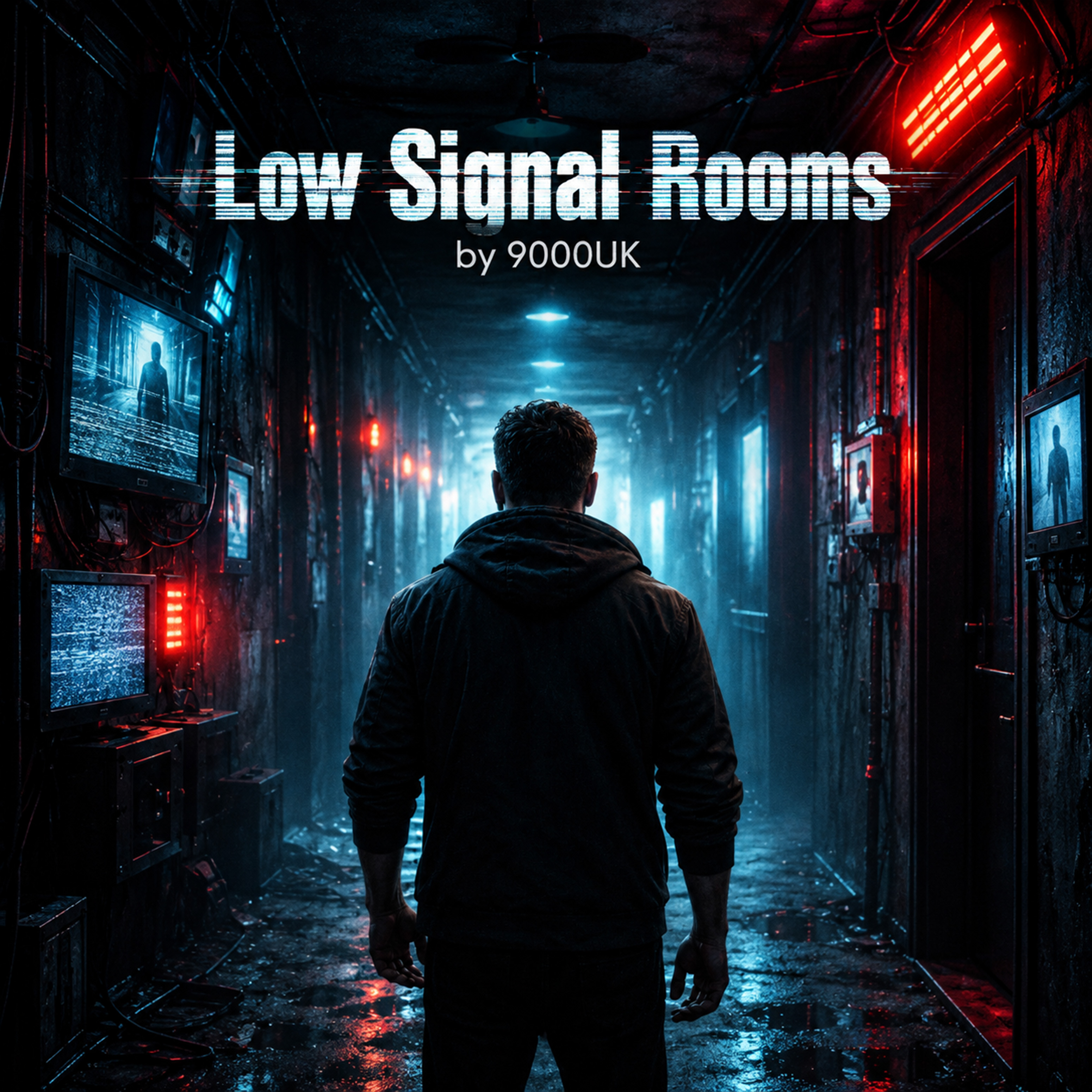
Low Signal Rooms
A dark electronic drama track about surveillance, disconnection, and quiet tension, set in spaces where identity blurs, control feels unseen, and silence carries risk.
“Low Signal Rooms – Dark Electronic TV Drama” explores isolation and unease inside controlled, low-visibility environments. The intro establishes a subdued setting shaped by neon bleed, concrete corridors, and ambient hum, where security feels fragile and presence feels monitored rather than shared. Light and sound behave unpredictably, setting a tone of distrust and withdrawal.
The verses focus on distortion and detachment. Flickering streetlights, borrowed lives behind glowing windows, and coded haze suggest fragmented realities and mediated identities. Physical sensations slow down while awareness sharpens, with wires under skin and measured breath signalling internal regulation under pressure. Communication breaks down through static, avoidance, and silence, reinforcing separation rather than clarity.
The chorus introduces the central metaphor of low signal rooms as spaces of waiting and constraint. Time bends, perception shifts, and appearances lose reliability. Screens, shadows, and night cycles replace certainty with repetition, suggesting systems resetting while individuals remain trapped inside them.
As the track progresses, movement becomes calculated and minimal. Names dissolve, meaning slips, and decisions reduce to survival choices rather than expression. The outro closes without resolution, leaving only residual light and lost signal. The emotional tone stays restrained, tense, and watchful, presenting danger as subtle and constant rather than explosive, suited to slow-burn television drama and psychological suspense.

Pressure On
A high-tension electronic trailer track portraying relentless urban pressure, where time, risk, and exposure force decisive action with no margin for error.
“Pressure ON – High-Tension Film Trailer Track” frames the city as an unforgiving environment driven by time and surveillance. The intro establishes immediate confinement, cold concrete, sirens, and an internal clock amplifying stress. Awareness becomes survival, with focus replacing reflection from the opening moments.
The verses rely on sharp, mechanical imagery. Flickering lights, blurred faces, engines, and heavy bass mirror a system in constant motion. Every step feels unstable, with no safety net or backup available. Experience is shaped through impact and consequence, not preparation, reinforcing a mindset hardened by repeated exposure to risk.
The chorus concentrates pressure into a single command state. Red lights, public space, and the threat of collapse heighten visibility and stakes. Fear remains controlled rather than expressive, while momentum overrides hesitation. Silence acts as a trigger, intensifying vulnerability once sound drops away.
As the track progresses, options narrow. There are no heroes, explanations, or clean exits, only forward movement and cost. The outro locks the scene without resolution, fading to black while tension continues beneath the surface. The emotional tone stays cold, focused, and cinematic, presenting pressure as a permanent condition rather than a momentary surge.
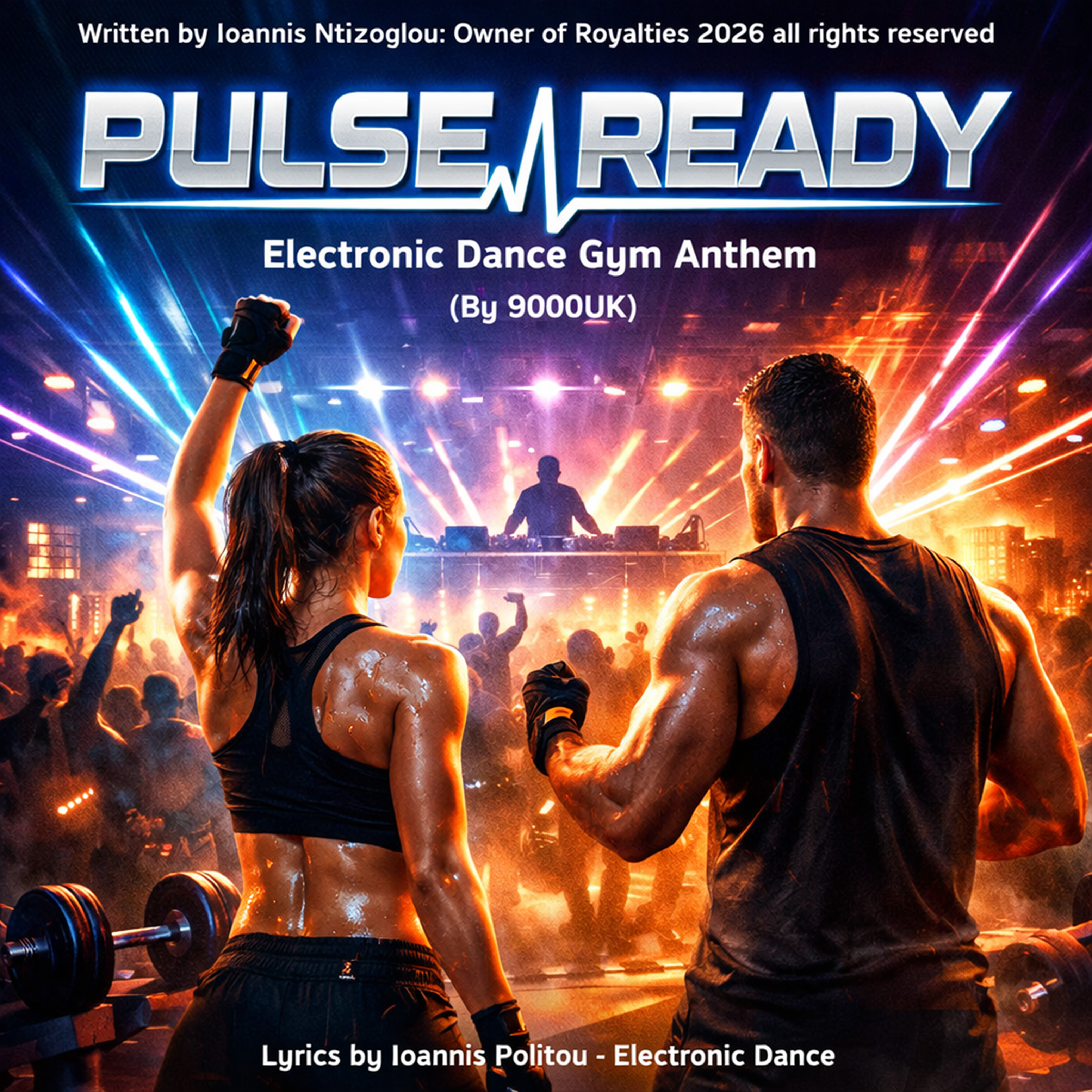
Pulse Ready
An electronic dance anthem built for high-intensity training, capturing physical drive, rhythmic focus, and the mental lock-in where sound and movement merge.
“Pulse Ready – Electronic Dance Gym Anthem” centres on physical activation through rhythm and repetition. The intro drops you straight into exertion, where lights, vibration, and breath align before conscious thought. There is no preparation phase, only immediate engagement, reinforcing a mindset shaped by action rather than buildup.
The verses translate workout mechanics into sensory detail. Sweat, mirrors, muscle burn, and counting reps frame effort as constant feedback. Sound functions as a structural force, lifting weight, setting posture, and sustaining momentum. Neon light and snapping kick drums sharpen focus, while doubt is treated as something overridden through motion rather than addressed directly.
The pre-chorus marks the mental switch. Tempo replaces deliberation, and control shifts from thought to rhythm. Limits bend as the beat dictates pace, suggesting endurance comes from synchronisation rather than raw force.
The chorus delivers the central release point. Drive, strain, and power circulate through the body as a closed loop, amplified at the drop. Energy feels contained and purposeful, with intensity held rather than spent. The repeated emphasis on presence underlines training as an immersive state rather than a passing moment.
In the second verse, precision increases. Synths and bass guide timing, while silence disappears entirely. Strength builds collectively within the shared space, yet focus remains internal and disciplined. The outro resolves with recovery rather than collapse. Breath slows, sound recedes, and strength stays embedded. The emotional tone remains controlled, motivating, and physical, aligning electronic movement with sustained performance and bodily commitment.
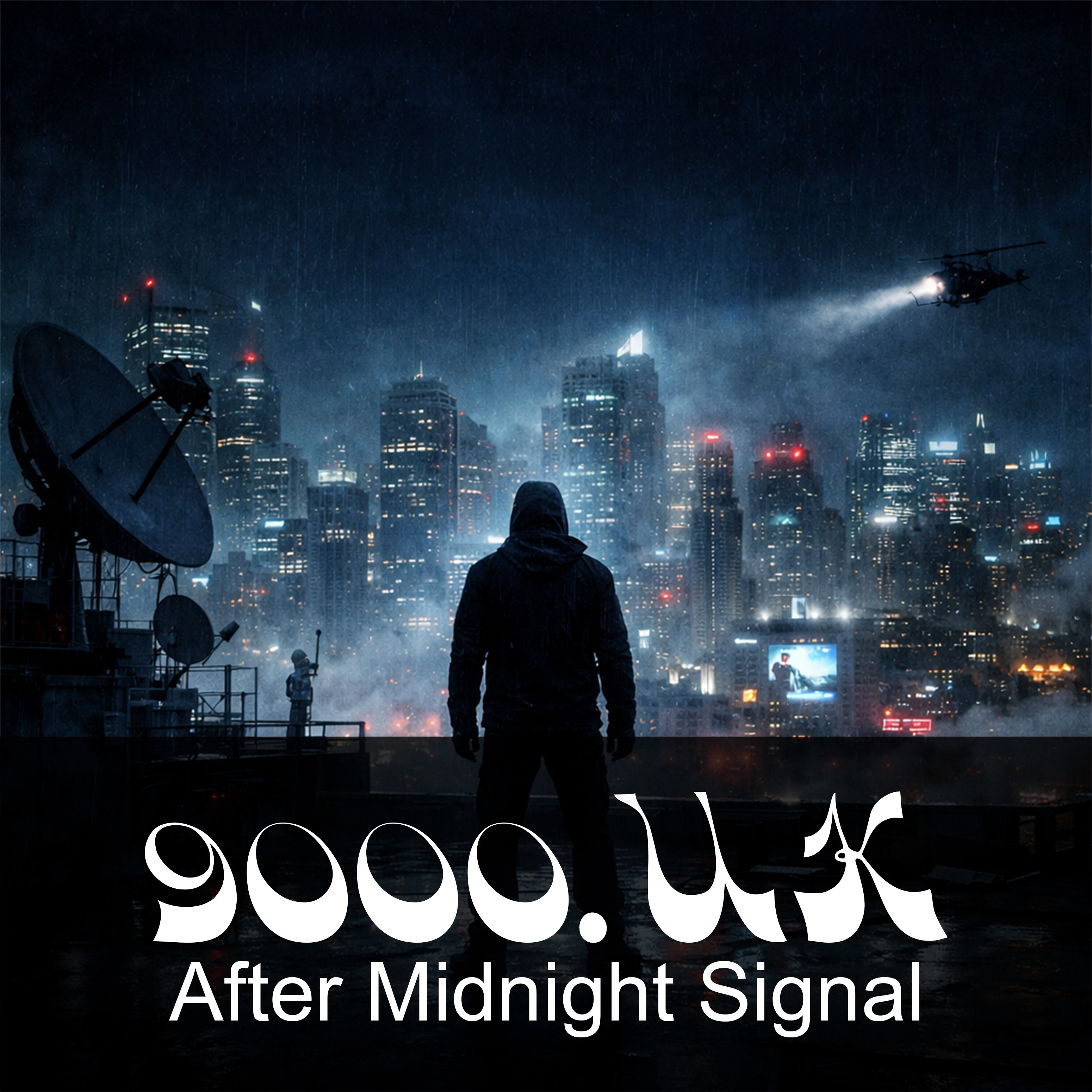
After Midnight Signal
A dark electronic lyric capturing late-night urban tension, where silence, surveillance, and restrained movement turn the hours after midnight into a controlled space of watchfulness and unresolved pressure.
After Midnight Signal unfolds inside a city that never fully rests. The intro places you in a low-light state of alertness, screens flickering, sleep absent, and anticipation hanging in the air. The environment feels mechanical yet alive, establishing a mood where time loops and something unseen waits to activate.
Verse one builds a noir-like atmosphere through fragmented urban imagery. Neon rain, humming stairs, and borrowed names suggest anonymity and displacement. Truth appears unstable, constantly reorganising under artificial light. Silence becomes strategic rather than empty, implying awareness, restraint, and power held through observation instead of speech.
The pre-chorus introduces coded systems. Heart rate aligns with streetlight patterns, and signals collide. This frames the city as a network where human rhythm merges with infrastructure. Pressure rises without explosion, reinforcing the track’s controlled intensity.
The chorus defines the emotional centre. Movement slows after midnight, not from hesitation, but from intent. There is no confession or release. Tension is preserved, not resolved. Staying unseen and holding space between scenes suggests existing in transition, operating in margins rather than outcomes.
Verse two deepens this quiet surveillance. Concrete becomes a witness, time shifts sideways, and every step carries consequence. Voices pass close but never connect, heightening isolation. The contrast between surface calm and internal heat maintains suspense, presenting control as endurance rather than escape.
The outro refuses closure. Lights dim, signals persist, and nothing truly ends. The story continues without resolution, mirroring late-night hours where actions ripple forward quietly. The tone remains restrained, atmospheric, and watchful, suited to dramatic visual narratives where tension lives in what stays unsaid.

After Sunset Feel
A sleek funky house track capturing the calm lift and shared freedom of evening transitions, where rhythm, warmth, and light draw people into a single, unguarded night.
After Sunset Feel is built around atmosphere and release, focusing on the shift from day to night as a space for connection and movement. The setting blends warm sand, city lights, water, and neon, creating a smooth, open environment where tension fades and rhythm takes control. The song avoids narrative complexity, choosing clarity, repetition, and sensation as its core drivers.
The verses establish a relaxed physical presence. Feet on sand, slow breathing cities, steady bass, and half-dream states frame a moment where time aligns and effort drops away. Language stays light and direct, mirroring the functional role of the track as an ad-ready hook designed to feel immediate and inviting.
The chorus carries the emotional centre. After sunset becomes both a time marker and a signal for openness. Hearts and skies open together, suggesting shared experience rather than individual expression. Movement is collective, guided by sound rather than words, reinforcing unity and ease.
Verse two deepens the visual palette with neon reflections and golden-hour tones. Truth appears through rhythm, not dialogue, emphasising music as the primary communicator. Disguise and heaviness are removed, leaving only motion and light.
The repeated structure reinforces memorability and accessibility, essential to its purpose as a house-driven promotional track. The outro strips the message down to its core phrase, allowing the feeling to linger without resolution. Overall, the song functions as a clean, modern groove built for lifestyle, nightlife, and summer-focused visuals, where emotion is conveyed through flow, warmth, and repetition rather than story.