
Discography

Discography
Browse the complete 9000UK discography, featuring original music across multiple genres. This catalogue includes experimental works, genre-blending tracks and evolving creative releases.
Full Music Catalogue
- All
- AbsurdCore
- Afrobeats
- Amapiano
- Ambient
- Ballad
- Blues
- Calming Music
- Christian
- Classical
- Country
- Dance
- Dark
- Dark Electronic
- Dark Trap
- DUB
- Easy Listening
- EDM
- Electronic
- Experimental Pop
- Folk
- Funk
- Gospel
- Gospel Blues
- Greek Music
- Grime
- Hip-Hop
- Hyperpop
- Indie
- J-Pop
- Jazz
- Just Music
- Lo-Fi
- Love Song
- Metal
- Minimal Techno
- Orchestral
- Pop
- Punk
- R&B
- Rap
- Reggae
- Relaxing
- Rock
- Soft Rock
- Soul
- Spiritual
- Stress Relief
- Trap

UNIVERSE
A complete periodic-table rap turning all 118 elements into an ordered symbol-name-clue memory challenge, linking chemistry with life, technology, medicine, research and the wider universe.
UNIVERSE turns the complete periodic table into a structured rap-based memory exercise, moving through all 118 chemical elements in atomic-number order. Rather than presenting the table as a static scientific reference, the lyrics create a repeated learning pattern built around three pieces of information: the spoken form of each chemical symbol, the element name, and a short association designed to help the listener remember it. Hydrogen becomes “star fuel”, Helium connects with “balloons”, Carbon with “life”, Iron with “blood”, Copper with “wires”, and Calcium with “bones”. This symbol-name-clue system gives every entry a compact identity while preserving the sequence of the table.
The countdown in the intro, “3, 2, 1, Go!!!!”, frames the piece as an active challenge before the first ten elements begin. From there, the verses progress numerically in manageable groups, starting with familiar elements and everyday associations before advancing into transition metals, lanthanides, actinides and the increasingly specialised superheavy elements. The subject matter therefore becomes more technically demanding as the song advances, yet the underlying lyrical method stays consistent. References range from ordinary objects and human biology to electronics, medicine, energy, scientific research and advanced technology, connecting abstract chemical names with recognisable applications or concepts.
At the centre of the song, the hook explains the learning method directly: “Symbol, name, memory clue” followed by “Say the beat, remember too”. This turns the rap format itself into part of the educational idea. Repetition, numerical order and concise associations work together as a mnemonic system, while “One to one hundred eighteen” states the scale of the challenge and reinforces the objective of learning the entire table rather than a selected group of common elements.
The later verses give the concept a distinctive sense of progression. Familiar references such as jewellery, batteries, magnets and touchscreens gradually give way to PET scans, control rods, nuclear fuel, neutron sources and superheavy-element studies. By verses eleven and twelve, the vocabulary reflects elements whose practical associations are dominated by scientific and nuclear research. Reaching Oganesson at 118 therefore functions as the completion point of a journey begun with Hydrogen at number one.
The title UNIVERSE gives the catalogue of elements a wider meaning. The lyrics move through the chemical building blocks associated with stars, air, life, technology, medicine and scientific investigation, linking the periodic table with the material world beyond the classroom. The final “Your turn!” then shifts responsibility to the listener. After demonstrating the sequence from one to 118, the song ends as a direct invitation to repeat, recall and perform what has been learned.

I Turned Pain Into Millions
A motivational rap anthem about transforming struggle, rejection, and hardship into discipline, success, financial growth, and a powerful winning vision.
“I Turned Pain Into Millions” is a motivational rap track about personal transformation, resilience, and long-term ambition. The lyrics tell the story of someone starting from financial struggle, isolation, and doubt, then using pain as fuel to build discipline, confidence, and success.
The song uses strong imagery such as cold nights, coins on the floor, locked dreams, broken roads, scars, bridges burned, and a throne built brick by stone. These images show the journey from hardship to achievement, where every setback becomes part of the foundation for growth.
The repeated chorus reinforces the central message: pain is not the ending, it becomes the source of power. The track presents success as something earned through patience, focus, daily work, and mental strength rather than luck. Emotionally, the song feels determined, proud, and defiant, with a clear message of proving doubters wrong and turning struggle into legacy.

Aderfe
Aderfe - Αδερφέ Μου - Ψυχή της Ψυχής Μου is a heartfelt Greek folk tribute honouring a beloved brother whose sacrifice, loyalty, hard work, and unconditional support shaped the narrator’s life.
Aderfe - Αδερφέ Μου - Ψυχή της Ψυχής Μου is a deeply emotional Greek folk ballad that celebrates the unbreakable bond between brothers. Through powerful memories, personal gratitude, and heartfelt admiration, the song portrays a brother not only as family but as a lifelong protector, mentor, and source of strength whose influence extends across time and distance.
From the opening verse, the lyrics establish a sense of reflection and permanence. Shared experiences are described as being etched into the earth itself, symbolising memories that can never be erased. The older brother is presented as a figure of dignity, responsibility, and quiet leadership, someone who earned respect through actions rather than words. His commitment to supporting others and providing for his family becomes one of the song's central themes.
Hard work serves as a recurring symbol throughout the narrative. The descriptions of early mornings, demanding labour, and relentless dedication paint the portrait of a man who sacrificed personal comfort for the wellbeing of those around him. Despite carrying the weight of responsibility, he still found the emotional strength to offer kindness, affection, and encouragement. This contrast between physical hardship and emotional generosity gives the character exceptional depth.
The song becomes increasingly personal through specific memories that transform ordinary acts into powerful demonstrations of love. The repeated journeys between Nea Smyrni and Glyfada symbolise sacrifice, loyalty, and devotion. What might appear to others as simple lifts or favours becomes evidence of a brother who consistently put another person's needs before his own, regardless of exhaustion or inconvenience. These details ground the song in authenticity and make the tribute feel intimate and genuine.
The chorus elevates the brother into a symbolic figure of stability and protection. Describing him as "the soul of my soul" and "a rock within the storm" emphasises how deeply connected the narrator's identity is to his brother's presence. The imagery suggests a relationship that extends beyond blood ties and enters the realm of emotional and spiritual companionship. Love is presented as permanent, surviving both time and circumstance.
The second verse expands upon the brother's role as a constant source of support. He is portrayed as someone who never turned away during difficult moments and whose presence alone offered reassurance. The recurring images of hands, support, and a second heart reinforce the idea that the brother functioned as an extension of the narrator's own strength and resilience.
The bridge introduces themes of migration, separation, and enduring connection. Physical distance and life in a foreign country are shown as powerless against the bond shared between the two brothers. Borders, geography, and time become insignificant when compared with lifelong love and respect. The lyrics suggest that some relationships become foundational elements of identity and remain intact regardless of where life leads.
Emotionally, the song balances gratitude, admiration, nostalgia, and profound affection. While there is a sense of longing for the past, the dominant feeling is appreciation for a brother whose sacrifices helped shape the narrator's life. The repeated declarations of love create an atmosphere of sincerity rarely spoken openly, giving the song considerable emotional weight.
The outro brings the tribute full circle by comparing their shared story to a zeibekiko song. This connection links personal memory with Greek cultural tradition, suggesting that the brother's legacy will live on through storytelling, music, and remembrance. Ultimately, Aderfe - Αδερφέ Μου - Ψυχή της Ψυχής Μου is a moving celebration of brotherhood, honouring a man whose unwavering loyalty, hard work, and love became the guardian of an entire heart and a lifelong source of inspiration.
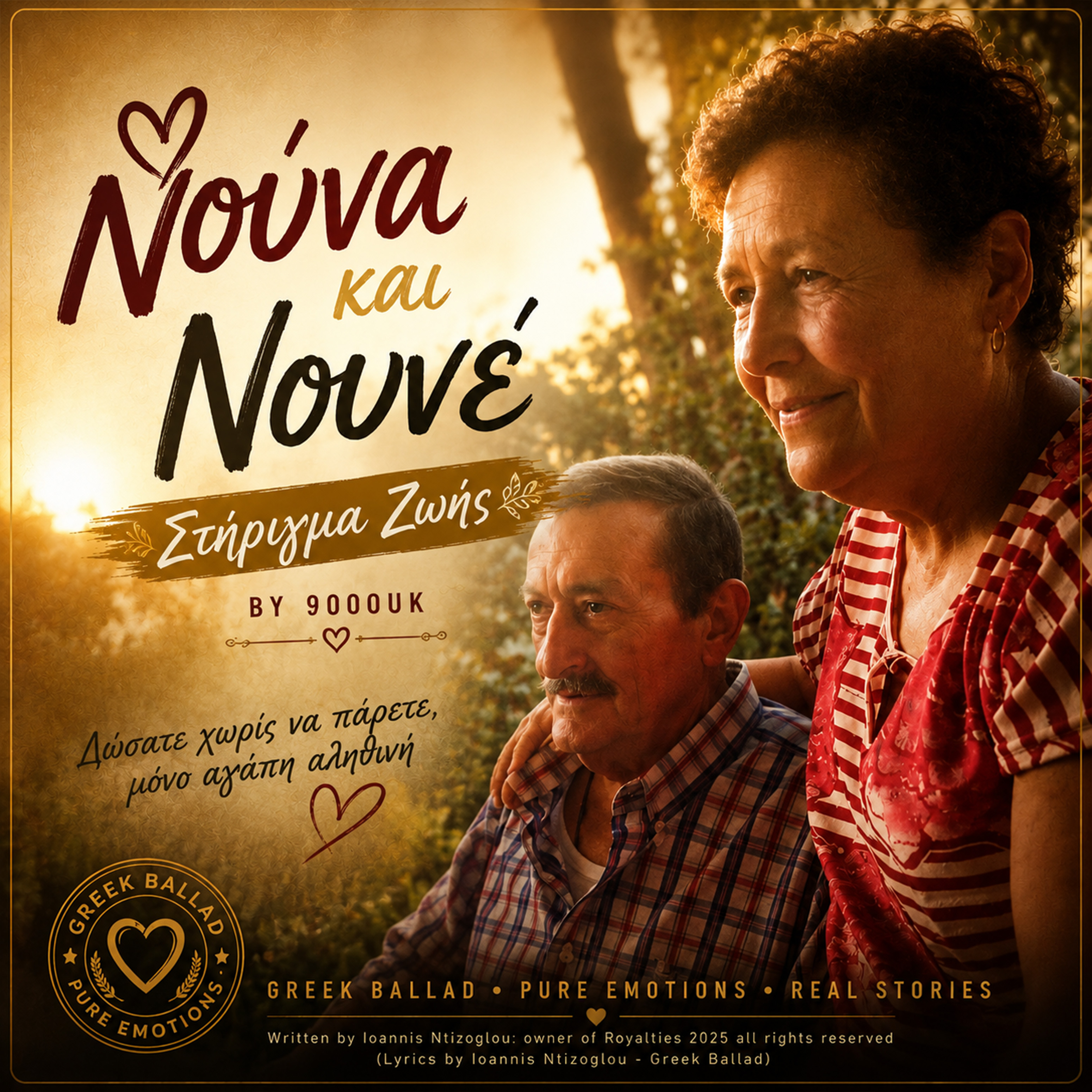
Nouna and Nounos
Νούνακα Μου - Στήριγμα Ζωής is a heartfelt Greek ballad expressing gratitude to a beloved godmother and godfather whose love, guidance, and generosity helped shape the narrator’s life.
Νούνακα Μου - Στήριγμα Ζωής is an emotional Greek ballad dedicated to the profound impact of a godmother and godfather whose unconditional support transformed the narrator's life. Built around themes of gratitude, family, sacrifice, and lifelong appreciation, the song serves as a deeply personal tribute to two people who became parental figures through their actions, love, and commitment.
From the opening lines, the godmother is elevated beyond her ceremonial role and portrayed as a "second mother", a source of light, safety, and stability. The imagery of a harbour in difficult seas establishes her as a place of refuge during periods of uncertainty and fear. This symbolism continues throughout the song, presenting her as a guiding force who offered direction when the narrator felt lost and vulnerable.
The first verse focuses on emotional support and mentorship. The lyrics describe a relationship built on trust, acceptance, and care, highlighting how the godmother welcomed the narrator as one of her own. Her home becomes a symbol of belonging, while her guidance represents the values of kindness, love, and moral strength. The reference to blessed hands suggests both practical support and a deeper spiritual influence on the narrator's journey.
The pre-chorus introduces one of the song's strongest themes: selfless giving. The godparents are portrayed as people who never expected anything in return for their generosity. Their love is presented as the foundation upon which the narrator's achievements and stability were built. The embrace mentioned in the lyrics symbolises emotional security, encouragement, and the confidence needed to move forward in life.
The chorus reinforces the image of the godmother as a pillar of strength during difficult moments. She is described as a rock, providing stability through hardship while helping the narrator stand, dream, and ultimately find a better future. Alongside her, the godfather is remembered as a constant companion whose conversations, encouragement, and presence brought warmth and support during everyday struggles.
The second verse moves from emotional guidance to practical assistance. The act of helping the narrator secure a first home and providing household necessities becomes a powerful symbol of rebuilding a life. The house itself represents independence, dignity, and a fresh beginning. The gift of household items is transformed into something greater than material support, becoming a symbol of hope, belief, and investment in another person's future.
The bridge broadens the tribute by celebrating the rare nature of such generosity. The godparents are presented as exceptional individuals whose kindness stems from genuine compassion rather than obligation. Their actions embody values often associated with traditional family and community bonds, where helping others is viewed as a natural expression of love.
Emotionally, the song is warm, sincere, and deeply grateful. Unlike songs centred on loss or regret, this ballad focuses on appreciation while the memories remain vivid and cherished. The tone combines tenderness with admiration, creating a heartfelt expression of thanks for a lifetime of support.
At its core, Νούνακα Μου - Στήριγμα Ζωής is a tribute to chosen family, selfless generosity, and the people who quietly change lives through acts of kindness. It celebrates the lasting influence of love given without expectation, honouring two individuals whose guidance, sacrifices, and unwavering presence became the foundation upon which the narrator built a better future.

Ellada
Ellada - Ελλάδα Μου is an emotional Greek zeibekiko tribute expressing deep love for Greece, blending memories, loss, nostalgia, and healing through music, homeland, and cultural identity.
Ellada - Ελλάδα Μου is a deeply personal Greek folk and zeibekiko tribute that explores the powerful emotional bond between an individual and their homeland. Through themes of nostalgia, longing, remembrance, and devotion, the song presents Greece as both a source of pain and a source of healing, capturing the complex relationship many people feel toward the place that shaped them.
The opening verses establish a reflective atmosphere filled with loneliness, sorrow, and personal struggle. The narrator recalls growing up surrounded by silence and hardship, finding comfort in the sound of zeibekiko music. The transformation of wounds into prayer through music introduces one of the song's central ideas: suffering becomes meaningful when connected to memory, culture, and identity.
Throughout the lyrics, Greece is portrayed as a living presence rather than merely a country. The repeated cries of "Ελλάδα μου" elevate the homeland into a symbol of love, belonging, and spiritual refuge. The powerful phrase "της καρδιάς μου φυλακή και γιατρικό" presents Greece as both a prison and a cure, expressing the emotional contradiction of being forever bound to one's roots while also drawing strength from them.
The references to Glyfada's streets, beaches, friendships, lost loves, and shared experiences create vivid imagery of a life deeply intertwined with specific places and memories. These locations become emotional landmarks, preserving moments of joy, heartbreak, and personal growth. The beaches and narrow streets symbolise the passage of time, while the scars and tears represent experiences that continue to shape the narrator's identity.
Zeibekiko serves as the song's emotional and cultural foundation. More than a musical style, it becomes a ritual of remembrance and survival. The repeated dedication of the dance to those who have left and will never return introduces themes of loss, migration, separation, and mortality. Through the zeibekiko, absent friends, lost loved ones, and former chapters of life remain present.
The chorus expands the song's emotional reach by portraying Greece as a guiding force that illuminates darkness, heals emotional scars, and provides strength against life's challenges. The homeland becomes a source of resilience and wisdom, teaching the narrator how to confront inner struggles and endure difficult times. These lines transform the song from a simple tribute into a declaration of gratitude and lifelong loyalty.
Emotionally, the track balances melancholy, pride, devotion, and longing. It carries the atmosphere of a late-night zeibekiko performed for memories that refuse to fade. The repeated cries of love toward Greece create a sense of catharsis, allowing personal pain to be expressed openly and transformed into appreciation.
At its core, Ellada - Ελλάδα Μου is a love letter to homeland, memory, and identity. It honours the people, places, experiences, and traditions that remain alive within the heart long after time has passed. The song celebrates Greece not only as a physical place but as an enduring emotional home that continues to guide, comfort, and inspire those who carry it within them.

Ascendancy
A motivational rap anthem about reaching the final stage of success through years of struggle, discipline, resilience, and unwavering belief in a greater destiny.
“Ascendancy - The Final Rise” is a motivational rap track focused on achievement, perseverance, and the fulfilment of long-term ambition after years of struggle and sacrifice. The lyrics present success as the culmination of endurance, discipline, and relentless determination, where every hardship becomes part of the climb toward greatness.
The song uses symbolic imagery such as summits, crowns, rising heights, beams of light, and final climbs to represent transformation and victory. Ascendancy itself symbolises reaching a higher level of power, recognition, and personal fulfilment after enduring difficult challenges. The repeated references to climbing and rising reinforce the idea of continuous progress toward a destined outcome.
Emotionally, the track carries a triumphant and uplifting tone. The verses reflect on years of silent effort, setbacks, and determination, while the chorus acts as a celebration of becoming living proof that dreams achieved through persistence are possible. The lyrics emphasise patience and resilience, portraying every failure as guidance leading toward greater success.
Themes of destiny, vision, and earned greatness run throughout the track. The song highlights how strength is built over time through sacrifice and focus rather than instant recognition. The phrase “the final rise” gives the narrative a cinematic sense of completion, suggesting the arrival at a long-awaited moment of victory.
The outro closes the track with a powerful feeling of accomplishment and closure, symbolising the completion of the journey from struggle to triumph. Overall, “Ascendancy - The Final Rise” stands as an anthem of perseverance, self-belief, and ultimate achievement after enduring years of pressure and sacrifice.
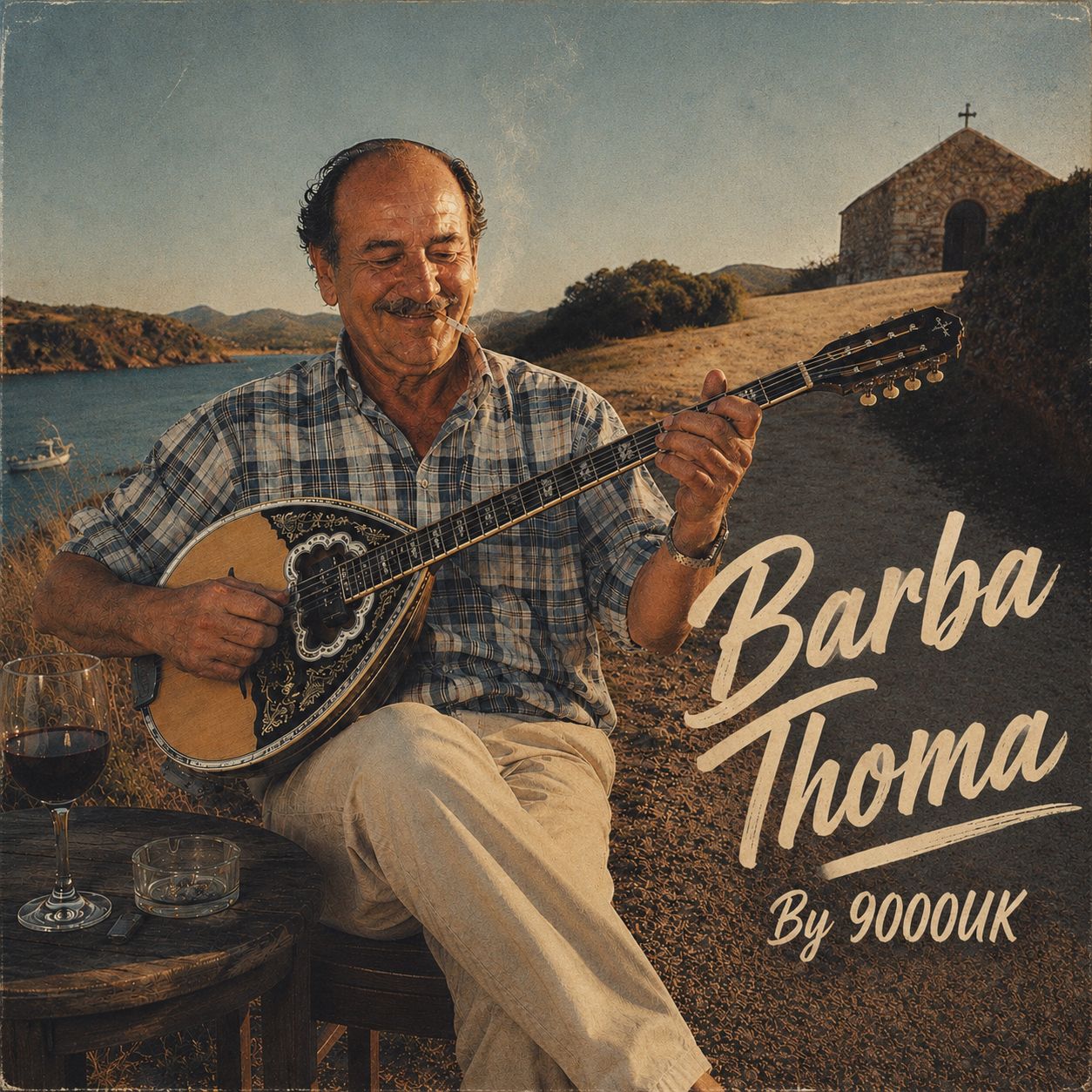
Barba Thoma
Barba Thoma - Greek Zeibekiko Tribute is a heartfelt Greek folk tribute honouring a respected man whose strength, dignity, kindness, and love for zeibekiko continue to live on in memory and song.
Barba Thoma - Greek Zeibekiko Tribute is a nostalgic and emotional Greek folk ballad that celebrates the life, character, and lasting legacy of a beloved figure known as Barba Thoma. Set against the coastal backdrop of Anavyssos, the song paints a vivid portrait of a hardworking man whose presence commanded respect without wealth or status, making him a king among ordinary people.
The lyrics use powerful imagery of rough working hands, sorrowful eyes, cigarettes, wine, and zeibekiko dancing to symbolise a generation shaped by hardship, honour, and resilience. Barba Thoma represents the traditional Greek working-class spirit, carrying personal burdens while remaining strong for others. His hidden wounds and unspoken struggles are contrasted with his unwavering dignity, creating a portrait of quiet heroism.
The recurring zeibekiko motif serves as the emotional centre of the song. More than a dance, it becomes a symbol of memory, pain, pride, and personal expression. Through the mournful voice of the bouzouki and the heavy rhythm of the zeibekiko, Barba Thoma's life story continues to be told long after his passing. The music acts as a bridge between generations, preserving both his character and the values he embodied.
The chorus elevates Barba Thoma into a symbolic figure whose influence extends beyond his lifetime. He is remembered as a leader of hearts, a source of comfort, and a man whose spirit remains present whenever people gather to dance, remember, and honour the past. His memory becomes woven into community identity, showing how ordinary individuals often leave extraordinary legacies.
The second verse deepens this theme by highlighting how local streets still speak his name. The references to humility, honour, simple needs, and old-fashioned values position him as a representative of a disappearing era. The song reflects a longing for authenticity, respect, and human connection in a changing world.
Emotionally, the track balances admiration, melancholy, gratitude, and cultural pride. The outro transforms Barba Thoma from a historical person into a living symbol, suggesting that while people pass away, their spirit survives through stories, music, and collective memory. The final image of his melody guiding those left behind reinforces the song's message that true legacy is measured not by material success, but by the lasting impact one leaves on the hearts of others.
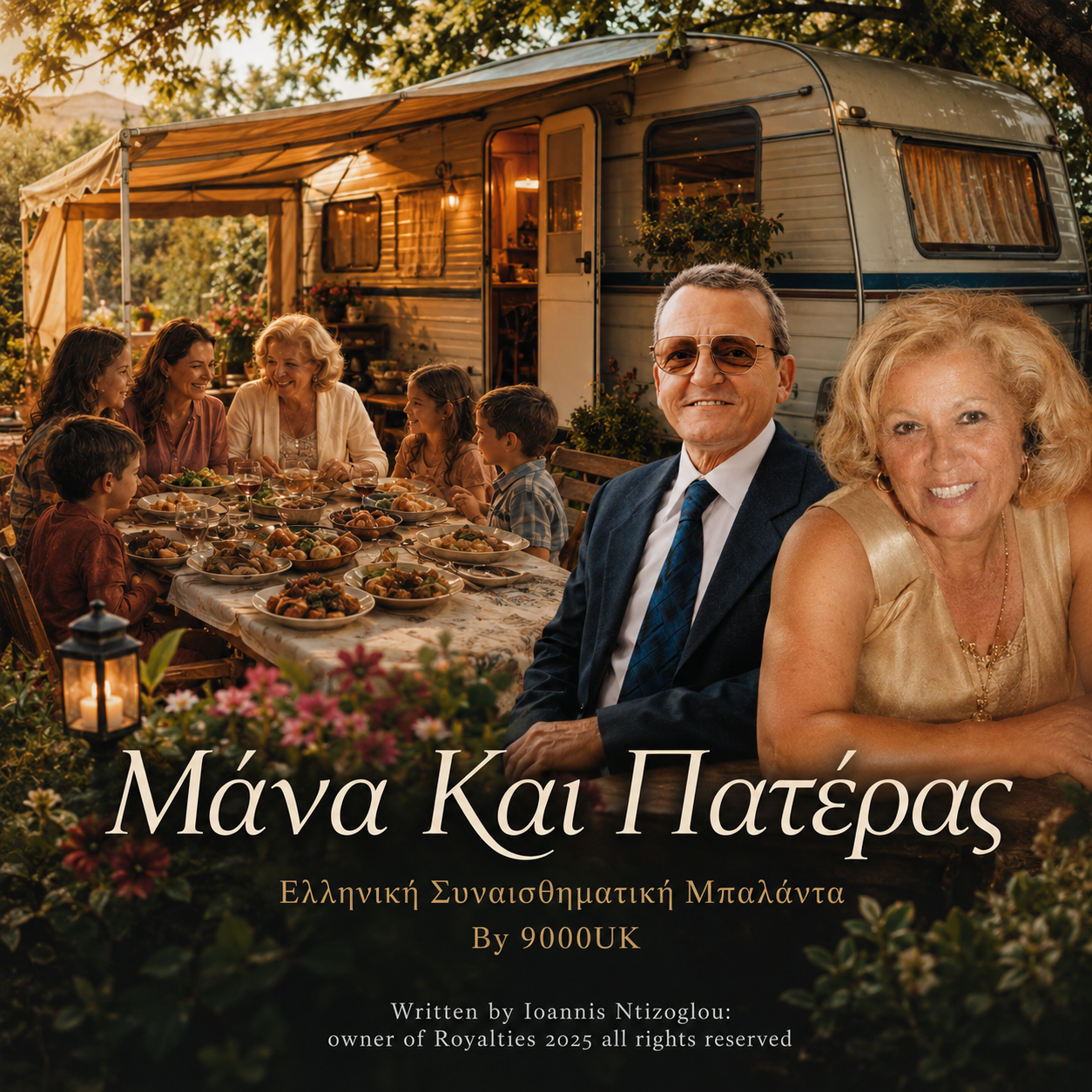
Mana And Pateras
A deeply emotional Greek ballad about parental love, sacrifice, faith, and the lasting strength of family bonds that continue beyond loss and time.
Written by Ioannis Ntizoglou: owner of Royalties 2025 all rights reserved
Mana And Pateras
(Η Μάνα Και Ο Πατέρας - Ελληνική Συναισθηματική Μπαλάντα By 9000UK)
(Lyrics by Ioannis Ntizoglou - Greek Ballad)
This song is a heartfelt tribute to family, rooted in Greek culture, memory, faith, and emotional endurance. It presents the mother and father as the emotional and spiritual foundation of the home, showing how their love continues to shape the family even after death.
The intro immediately creates warmth and familiarity. Growing up in the same house “with love and strong faith” establishes a traditional family environment where unity and resilience are central. The mother is portrayed as a rock, while the father is described as having a golden soul. These images define them not through wealth or status, but through character and sacrifice.
Verse 1 introduces grief with restraint and dignity. The father’s passing in January is direct and personal, but the focus quickly shifts toward the mother’s devotion during his final days. The line describing her holding “the hand of heaven” is one of the strongest symbolic moments in the song. It merges caregiving, spirituality, and farewell into a single image.
The verse also captures the emotional reality of watching someone remain beside a loved one until their final breath. The prayer, tears, and enduring love feel authentic because they are expressed through simple details rather than exaggerated language.
The pre-chorus introduces memory as something living within the home. Voices continue to exist through emotional presence, suggesting that family bonds survive beyond physical loss. This reflects a strong Greek cultural understanding of family as permanent rather than temporary.
The chorus is the emotional centre of the song. The mother is celebrated as the “light of life,” raising her children through hardship with faith and determination. Mentioning “two sons and one daughter” grounds the song in personal reality, while the image of the father proudly watching from above introduces spiritual continuity without becoming overly religious.
The image of five grandchildren around the table is particularly effective. The table symbolises family continuity, shared memory, and generational connection. Love is shown not as emotion alone, but as something inherited and carried forward.
Verse 2 softens the tone with intimate domestic imagery. The mother speaking for hours and cooking meals “full of hugs” transforms ordinary family moments into expressions of affection and care. This section is emotionally strong because it focuses on familiar behaviours many listeners recognise from their own family experiences.
The references to children and grandchildren deepen the sense of unity. Everyone remains connected “like a prayer,” reinforcing the spiritual and emotional bond holding the family together.
The second pre-chorus adds specifically Greek Orthodox imagery through candles, icons, and whispered prayer. These details ground the song culturally and give it authenticity. Faith here is quiet, humble, and integrated into daily life rather than presented dramatically.
The final chorus gains additional emotional weight because the listener now fully understands the family structure and emotional history behind the lyrics.
The outro closes beautifully. Time takes people away physically, but the family remains alive “like fire.” The final image of the mother as strength, the father as guide, and the home remaining forever alive creates a powerful sense of continuity and emotional permanence.
The greatest strength of this song is sincerity. It feels personal, culturally grounded, and emotionally honest. It succeeds because it focuses on real family moments instead of abstract sadness.
The only weakness is that some symbolic phrases, such as light, storms, and fire, are familiar within emotional ballads. More unique details about the father’s personality or shared family memories would make the storytelling even more distinctive.
Overall, this is a touching and authentic Greek ballad about love, sacrifice, grief, faith, and the enduring strength of family across generations.

From Rock Bottom to Respect
From Rock Bottom to Respect - Rising Through the Struggle is a motivational rap about overcoming hardship, rejection, and poverty through resilience, discipline, and relentless effort to earn genuine success and respect.
From Rock Bottom to Respect - Rising Through the Struggle is a powerful motivational rap that chronicles a journey from adversity and obscurity to achievement, recognition, and earned respect. The song explores themes of perseverance, self-belief, discipline, and personal growth, presenting respect not as something freely given, but as something built through struggle, sacrifice, and consistent effort.
The narrative begins at the lowest point, with images of cold nights, empty pockets, and dreams that exist without external support or recognition. The lyrics paint a vivid picture of someone starting with very little, facing difficult circumstances while holding onto a vision that others dismiss. The absence of applause, opportunity, or validation establishes a foundation of hardship that makes the eventual transformation more meaningful.
A central theme throughout the song is the relationship between struggle and character development. Hardship is portrayed as a force that strengthens rather than weakens. Pressure sharpens determination, setbacks create resilience, and every difficult experience contributes to personal growth. The recurring imagery of steel, storms, and construction symbolises the gradual process of becoming stronger through adversity.
The song places significant emphasis on discipline and long-term thinking. The narrator approaches success methodically, learning, planning, and building step by step. References to bricks, architecture, and construction reinforce the idea that lasting achievement is created through patience and consistent effort rather than shortcuts. Every setback becomes another building block in a larger vision.
The pre-chorus highlights one of the track's strongest messages: people often see the results of success without understanding the sacrifices behind it. The contrast between visible achievement and invisible struggle runs throughout the song. Years of hardship, rejection, and perseverance remain unseen by outsiders, yet those experiences become the foundation of everything eventually accomplished.
The chorus centres on the concept of earned respect. Unlike wealth, fame, or status, respect is presented as the ultimate reward for persistence and authenticity. The lyrics reject ideas of inherited privilege or easy success, emphasising that true respect comes from overcoming obstacles through hard work and determination. Scars, setbacks, and sacrifices become symbols of credibility and achievement.
The second verse expands on the theme of transformation through effort. Late nights, creative work, and relentless focus are contrasted with critics who observe from a distance without taking action themselves. The song suggests that achievement belongs to those willing to create, build, and persist rather than simply comment on the efforts of others. This distinction reinforces the value of action over opinion.
Another important theme is the conversion of rejection into motivation. Closed doors, criticism, and doubt are transformed into fuel for progress. The narrator uses every obstacle as an opportunity to become stronger, demonstrating that resilience often emerges from the very experiences designed to discourage it. The repeated image of walking through doubt like a soldier in the rain highlights determination under difficult conditions.
As the song progresses, recognition begins to replace scepticism. The same people who once doubted now offer respect, illustrating how success changes perception. Yet the lyrics never allow the narrator to forget where the journey began. The lessons learned at rock bottom remain central to the identity that was forged through hardship.
Emotionally, the track balances struggle, determination, confidence, and triumph. While it acknowledges poverty, rejection, and difficult circumstances, it maintains an empowering tone focused on growth and achievement. The narrative continually reinforces the belief that beginnings do not determine outcomes and that persistence has the power to reshape a person's future.
The outro serves as a final reflection on the value of building success from the ground up. The progression from the ground to the skyline symbolises a complete transformation, while the declaration that respect is earned rather than given summarises the song's core philosophy.
At its heart, From Rock Bottom to Respect - Rising Through the Struggle is an anthem of perseverance, discipline, and self-made achievement. It celebrates the journey of those who start with little, endure hardship without surrendering their vision, and ultimately earn respect through resilience, integrity, and unwavering commitment to their goals.