
Discography Reggae

Discography Reggae
Discover Reggae music by 9000UK, inspired by rhythm, positivity, and reflective themes.
Reggae Music by 9000UK
This Reggae discography by 9000UK centres on rhythm, offbeat emphasis, and relaxed pacing. The tracks promote groove and atmosphere, with themes rooted in balance and reflection.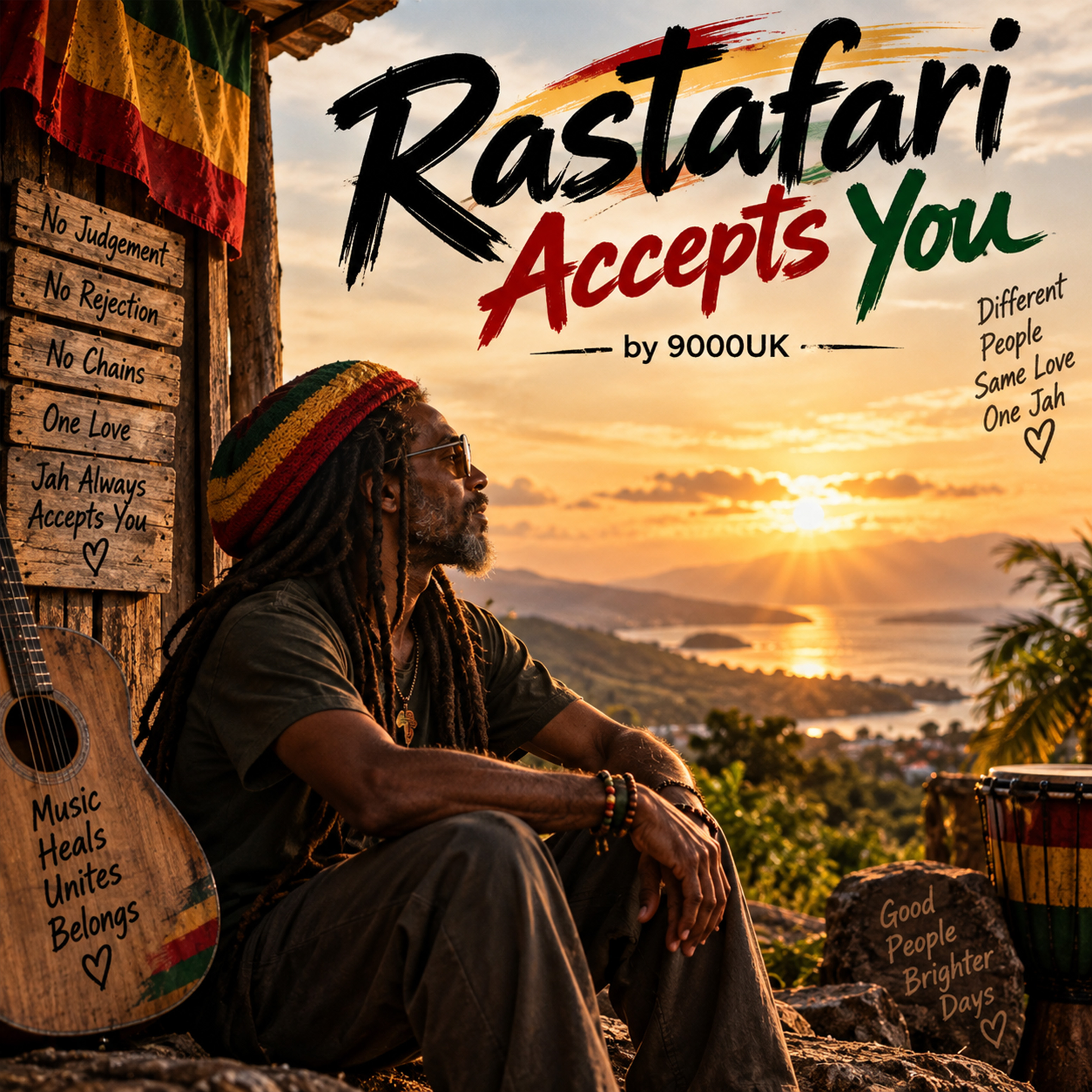
Rastafari Accepts You
“Rastafari Accepts You” is a roots reggae song of spiritual refuge and reassurance, affirming that when rejection comes from people or society, Jah’s love remains unconditional, protective, and free of judgement.
“Rastafari Accepts You” is a compassionate roots reggae composition centred on belonging, spiritual acceptance, and inner restoration. The song speaks directly to those who feel abandoned, misunderstood, or rejected by family, friends, or society, offering Rastafari faith not as doctrine, but as refuge—steady, patient, and without conditions.
The intro immediately establishes a tone of comfort, contrasting a cold, rejecting world with the constancy of Jah’s presence. This sets up the song’s emotional core: when human support fails, spiritual grounding remains. Verse 1 paints a raw picture of isolation—doors closing, trust breaking, and emotional exhaustion. The imagery of walking alone through night reflects both physical and psychological solitude, while Jah is introduced as a cleansing force that restores dignity and calm rather than condemning weakness.
The pre-chorus distils the pain of abandonment into a simple truth: rejection hurts most when it comes from those closest to you. This emotional tension flows directly into the chorus, which functions as the song’s central reassurance. The repeated line “Rastafari accepts you” is not framed as recruitment or superiority, but as unconditional welcome. Acceptance is paired with protection, resurrection of love, and freedom from judgement, reinforcing Rastafari as a space of healing rather than exclusion.
Verse 2 deepens the conflict by addressing generational and social misunderstanding. A mother’s confusion and peers’ mockery reflect the cost of choosing a spiritual path that challenges norms. Yet the Lion of Judah symbolises strength, courage, and divine affirmation, lifting the narrator from shame and stress. Liberation here is spiritual first—freedom from fear, self-doubt, and imposed guilt.
Throughout the song, Rastafari is portrayed as inclusive and restorative. There are no chains, no barriers, and no hierarchy—only welcome for “every troubled mind”. This framing aligns with reggae’s historical role as a voice for the marginalised, offering dignity and belonging where systems and relationships fail.
The outro closes with encouragement rather than resolution. Trials are acknowledged as ongoing, but blessings are constant. The listener is urged to stand proud and remain bold, affirming that rejection does not define worth and that one’s story is still unfolding.
Overall, “Rastafari Accepts You” is a gentle yet powerful roots reggae statement on faith, resilience, and unconditional spiritual acceptance. It positions Rastafari not as escape from hardship, but as a grounding force that embraces people exactly where they are, reminding them they are never truly alone.

Search Your Soul
“Search Your Soul” is a conscious reggae meditation on identity and self-discovery, urging listeners to turn inward, quiet external pressures, and uncover truth, purpose, and wholeness from within.
“Search Your Soul” is a reflective reggae track centred on inner truth, spiritual awareness, and personal identity. Rather than presenting answers, the song encourages introspection, framing self-knowledge as a quiet, deliberate journey that unfolds away from noise, expectation, and external control.
The intro sets a contemplative tone, establishing that truth does not announce itself loudly but reveals itself through stillness and attention. From the outset, the listener is invited to slow down and listen inward, positioning the soul as a keeper of stories, direction, and meaning.
Verse 1 addresses the pressures of modern life and societal conditioning. Images of a “winding road” and a “heavy load” reflect confusion and emotional weight, while Babylon symbolises systems that attempt to define identity from the outside. In contrast, the soul is described as an internal compass—steady, reliable, and resistant to manipulation. The mirror becomes a symbol of self-recognition, where identity is forged not by approval but by inner alignment.
The pre-chorus reinforces the act of withdrawal from control and distraction. Silence, breath, and detachment from imposed roles are presented as necessary steps toward reconnection. The song suggests that while the world may attempt to shape individuals like clay, the spirit already understands its own form.
The chorus delivers the song’s core message with clarity and repetition: true identity cannot be known without intentional inner searching. Silence becomes a space of power rather than emptiness, where fear is stripped away and inner light is allowed to surface. Wholeness is not granted externally; it is realised when the spirit is acknowledged and trusted.
Verse 2 expands the metaphorical landscape, contrasting vast external environments—mountains, rivers, deserts—with the deeper internal journey. Meditation is framed as an ancient gateway to purpose, linking personal growth to timeless spiritual practice. The imagery of roots and the mango tree emphasises grounding, heritage, and natural movement once self-knowledge is achieved.
The outro closes with affirmation rather than resolution. Truth is described as already present, waiting patiently to be uncovered. By ending with self-sovereignty—“in control of my own soul”—the song affirms autonomy, awareness, and spiritual independence.
Overall, “Search Your Soul” functions as both guidance and reminder: identity is not found through imitation, pressure, or noise, but through honest inward listening. It is a calm yet powerful reggae statement on self-awareness, resilience, and the courage to know oneself fully.

Music Never Stops
“Music Never Stops” is a roots reggae celebration of music as an eternal, unbroken river—bridging generations, cultures, and technologies while affirming that the soul of sound outlives formats, trends, and time.
“Music Never Stops” is a reflective yet uplifting reggae anthem that frames music as a living force—constant, adaptive, and spiritually rooted. Using the recurring metaphor of a river, the song presents sound as something that flows endlessly through history, geography, and innovation, carrying human expression from one era to the next without losing its essence.
The intro establishes music as elemental: part of the bloodstream, synced with the heartbeat of creation itself. From there, Verse 1 expands the scope, moving from Kingston’s warmth to colder global landscapes, reinforcing reggae’s journey beyond its birthplace. Old-school roots and AI-generated tools are placed side by side, not as rivals but as coexisting expressions within the same current. The lyrics make a clear distinction between surface changes and inner truth—styles evolve, but the soul of the tune “never retire”.
The pre-chorus reinforces inclusivity and continuity. Whether music is shaped by hands, instruments, or code, its power remains intact. The song deliberately removes hierarchy, placing sound system selectors, traditional musicians, and digital creators within the same global vibration, unified by rhythm rather than divided by method.
The chorus distils the song’s philosophy into a chant-like affirmation. Music is portrayed as a giver of life, emotion, and connection—something that causes physical response and emotional resonance regardless of how it is made. Its permanence is emphasised through repetition, echoing reggae’s tradition of reinforcement through collective declaration.
Verse 2 deepens the generational dialogue. Vinyl, tapes, and modern AI tools are woven together as carriers of memory and storytelling. Elders’ voices and contemporary expressions are treated with equal respect, suggesting that innovation does not erase history but extends it. The “one drop” rhythm becomes a unifying heartbeat, linking yard culture with worldwide community.
The outro brings the metaphor full circle. Music continues to flow beyond endings, beyond ownership, beyond eras—running “until kingdom come”. By closing with 9000UK “carry di drum”, the song positions the artist not as the source of music, but as a custodian within an ongoing lineage.
Overall, “Music Never Stops” is both reassurance and statement: formats change, tools evolve, but music itself remains unstoppable—an eternal river of human spirit, culture, and shared rhythm.

The Music Leads The Way
“The Music Leads the Way” is a roots reggae affirmation that places human feeling, imagination, and spirit at the centre of creation, presenting technology and AI as tools that serve music—but never replace the soul behind it.
“The Music Leads the Way” is a conscious reggae statement that explores creativity in the modern age while firmly grounding artistic power in human emotion, intuition, and lived experience. Using warm riddim imagery and reflective lyrics, the song positions music as a guiding force that exists before language, logic, or technology.
From the intro, music is portrayed as instinctive and spiritual—something that speaks directly to the soul before words are formed. Verse 1 contrasts organic sensation with artificial systems, asserting that no machine can truly feel rhythm, vision, or heartbeat. Colour, melody, and movement arise naturally when the listener closes their eyes, framing creation as an internal, almost sacred process rather than a technical one.
The pre-chorus introduces the song’s central philosophy: AI is acknowledged openly, but clearly defined as secondary. It is a tool, not a source. The “heart” is the driver, the spark that turns sound into meaning. By stating that real reggae comes from truth, the song aligns itself with the genre’s historical roots in authenticity, resistance, and human storytelling.
The chorus expands this idea into a universal declaration. Music is described as the leader that sets pace, shapes time and space, and lifts energy higher. Creativity flows outward from feeling and imagination, while technology remains supportive rather than directive. This repetition reinforces a sense of balance rather than rejection—innovation is welcome, but only when guided by human intent.
Verse 2 deepens the argument by anchoring creativity in lived life. Rhythm and harmony are tied to experience, breath, and consciousness, reinforcing that meaning cannot be automated. The artist remains in control, choosing direction, tempo, and emotional tone, steering the process with purpose and awareness.
The final pre-chorus and outro resolve the song with clarity and calm confidence. Creation grows where humanity remains present; algorithms cannot replace instinct, culture, or spirit. The closing lines reaffirm trust in music as a natural guide—one that elevates rather than replaces the human role.
Overall, “The Music Leads the Way” functions as both reassurance and manifesto. It does not fear technology, but firmly rejects the idea that tools define art. Instead, it celebrates reggae as a living expression of soul-led creativity, reminding listeners that music begins—and must always begin—with the human heart.
Unity Never Dies
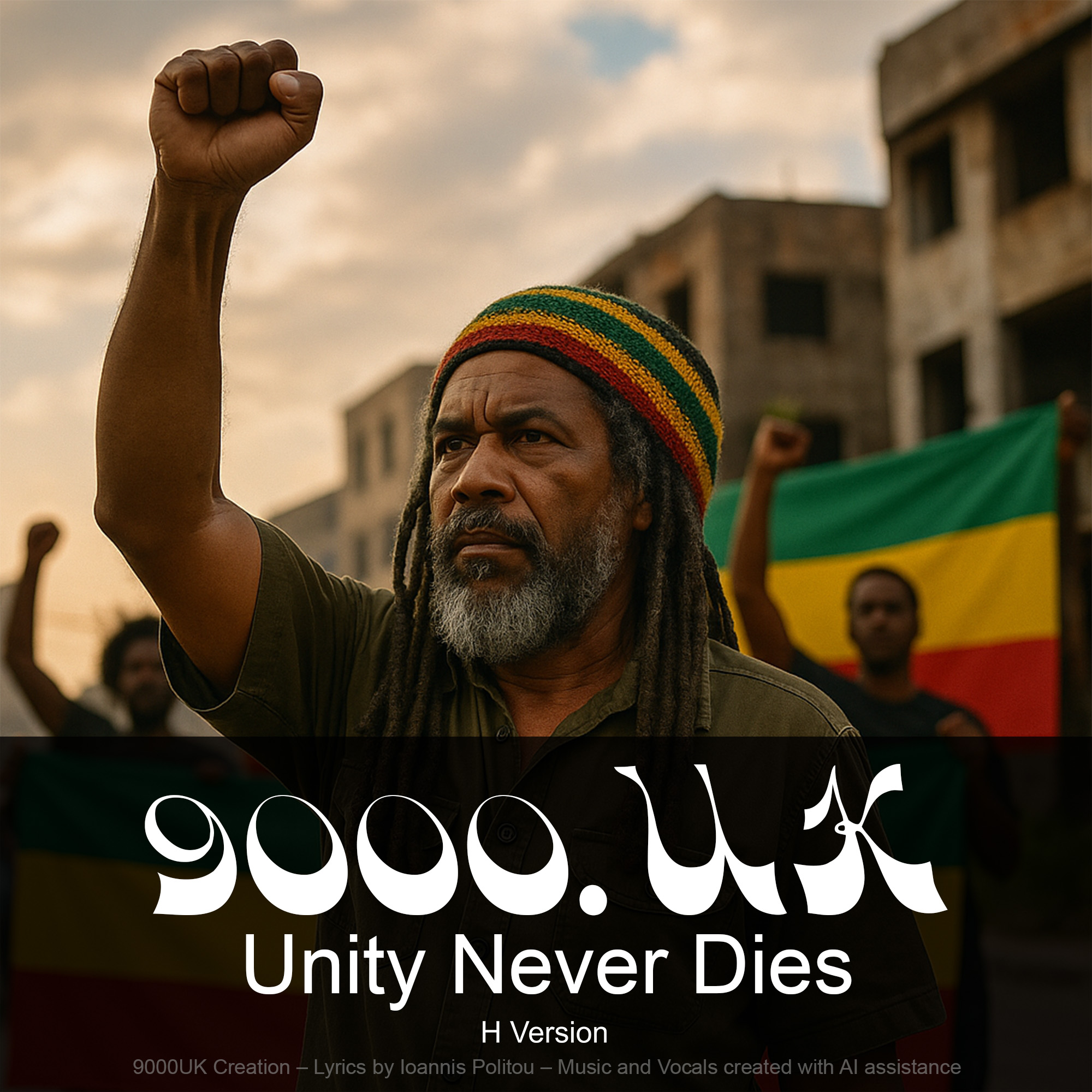
“Unity Never Dies” is a roots reggae protest anthem about collective resilience, exposing oppression, violence, and deprivation while affirming that human unity, truth, and love endure beyond fear and division.
“Unity Never Dies” is a politically conscious reggae track that channels classic roots tradition into a modern declaration of resistance and solidarity. Framed through the symbolic language of “Babylon,” the song confronts systems of oppression that rely on violence, scarcity, and division to control people, while asserting that unity remains an unbreakable human force.
The intro immediately establishes defiance and grounding, positioning spirit as stronger than any external pressure. From Verse 1 onward, the lyrics do not soften reality: bombed spaces, cut resources, and deliberate attempts to instil fear are named directly. Yet these images are not presented to induce despair. Instead, they function as proof of endurance, showing that even when basic necessities are weaponised, collective strength continues to rise.
Unity is personified as a living force—“like a lion stand”—suggesting courage, dignity, and communal protection. The movement from “trench to hill” widens the scope of struggle, emphasising that resistance spans social and geographic boundaries. Truth and love are framed as unconfinable energies, immune to imposed limits or intimidation.
The pre-chorus reframes suffering as transformation. Pressure does not extinguish spirit; it converts struggle into flame. This section reinforces the song’s philosophical core: domination fails when people retain belief in their own worth and right to thrive.
The chorus serves as the track’s moral anchor. Repeated declarations that “the human spirit of unity never dies” turn the song into a chant-like affirmation, echoing traditional reggae protest anthems where repetition strengthens resolve. By directly listing tactics of control—bombing, starvation, misinformation—the song exposes power while refusing to submit to it.
Verse 2 shifts towards hope through humanity itself. Borders and barriers are portrayed as artificial, contrasted with the natural imagery of rivers, light, and roots. Children’s voices introduce generational continuity, reminding the listener that justice is not only resisted for the present, but claimed for the future.
The outro concludes with certainty rather than victory laps. Babylon does not fall through chaos, but through proximity to truth. Unity is reaffirmed as permanent, echoing forward rather than ending cleanly, reinforcing the idea that the struggle — and the bond — continues.
Overall, “Unity Never Dies” stands as a roots reggae statement of moral resistance: uncompromising in its message, grounded in cultural symbolism, and unwavering in its belief that no system can extinguish collective human dignity when people stand together.

Captain Earthstrong
“Captain Earthstrong” is a dub-rooted birthday tribute celebrating love, culture, and strength, honouring a righteous sound-system warrior whose roots, warmth, and spirit uplift everyone around him.
“Captain Earthstrong” is a deeply personal dub tribute rooted in reggae culture, sound-system tradition, and intimate celebration. Framed as an earthstrong (birthday blessing), the song blends reverence, affection, and community spirit, positioning its subject as both a cultural guardian and a beloved partner.
The intro immediately establishes ritual and atmosphere: basslines warm the night, drums echo under moonlight, and the selector becomes a messenger of love and intention. The dedication is explicit—this is a blessing sent from the heart, riding the roots rhythm in honour of a warrior figure defined by strength, integrity, and presence.
Verse 1 grounds the story in shared history and authenticity. References to “shed days” and building sound systems reflect grassroots origins—growth earned through passion rather than status. Cultural identity runs deep, reinforced through humour, accent, and emotional openness. The subject is portrayed as joyful yet resilient, a man whose laughter and steadiness coexist with hardship and responsibility.
The chorus elevates the song into ceremonial praise. Titles like “Captain” and “King” are not about dominance, but leadership through love and righteousness. Martial imagery—“bassline marching like a warrior sign”—reframes music itself as disciplined, purposeful movement, advancing not through force but through vibration and moral design.
Verse 2 celebrates the living culture around him: Lovers Rock, roots sessions, and community broadcasts become acts of healing and upliftment. The sound man is honoured as a custodian of feeling and message, someone whose voice and selections carry meaning. The playful line about no longer stacking speakers contrasts material limits with limitless love, reinforcing emotional priority over possessions.
Verse 3 deepens the emotional core, shifting fully into devotion. Kindness is vast and tidal, bravery unmistakable. Shared everyday moments—like laughing over television—humanise the tribute, grounding legendary imagery in real companionship. References to King Solomon symbolise wisdom and legacy, positioning the subject as respected not only privately, but culturally.
The outro dissolves into mantra-like fragments—names, affirmations, wishes for more life and joy—mirroring the dub tradition of echo and repetition. It closes not with finality, but continuation: love held, time extended, vibration ongoing.
Overall, “Captain Earthstrong” is both love letter and cultural hymn—a song that honours roots, celebrates partnership, and affirms that true strength lies in kindness, consistency, and shared rhythm.

Nature Is No Crime
“Nature Is No Crime” is a conscious reggae protest song challenging environmental criminalisation and false ideas of freedom, declaring that true liberty cannot exist where land, water, and life itself are treated as offences.
“Nature Is No Crime” is a roots-conscious reggae statement that confronts the growing contradiction between modern systems of control and the natural freedoms of the earth. Through vivid imagery and pointed questions, the song challenges the idea that land, water, movement, and natural existence can be owned, restricted, or criminalised without eroding the very meaning of freedom.
The intro immediately frames nature as sacred and communal, not institutional. By questioning how trees can be judged like sinners, the song establishes its core argument: when nature is regulated as wrongdoing, morality itself becomes inverted. The earth is presented as a living presence that predates borders, states, and laws.
Verse 1 focuses on dispossession and restriction. Riverbanks become zones, soil is marked and gated, and access to land is framed as permission-based rather than inherent. Walking barefoot on “sacred ground” becomes an act of resistance, reconnecting the individual to creation’s timeless rhythm. The verse challenges authority by asking who has the right to decide when natural elements become “wrong”.
The pre-chorus sharpens the philosophical tension. If sunlight, rivers, and open air require approval, then freedom is exposed as a hollow concept. These lines turn environmental regulation into a moral inquiry, questioning not just policy but legitimacy.
The chorus delivers the song’s central declaration with clarity and force. By stating that freedom is an illusion where nature is penalised, the song strips away political language and reframes liberty as inseparable from the natural world. Seas and skies are invoked as symbols of forces that cannot truly be owned or restrained, reinforcing the futility and arrogance of control.
Verse 2 expands the critique to capitalism and exploitation. Borders are drawn across open plains, life is reduced to profit, and “order” is used as justification for extraction. In contrast, planting seeds becomes a quiet but powerful act of defiance, symbolising continuity, hope, and responsibility. The question of mountains becoming contraband underscores the absurdity of criminalising existence itself.
The outro resolves the song with grounded conviction rather than anger. Freedom is reclaimed not through legislation but through reconnection—to land, soul, and breath. The final lines make the message unmistakable: if nature is not free, humanity cannot be either.
Overall, “Nature Is No Crime” stands as a modern roots reggae manifesto—environmental, spiritual, and political—asserting that true freedom begins where the earth is respected, not regulated into silence.

Why Trade Peace
“Why Trade Peace” is a conscious reggae reflection that rejects performative luxury and social pressure, choosing inner calm, honesty, and kindness over status, hype, and unsustainable displays of success.
“Why Trade Peace” is a grounded, modern reggae track that challenges the culture of appearances, consumer pressure, and performative lifestyles. Through calm confidence and irie energy, the song questions why peace, truth, and self-respect are so often sacrificed for image, validation, and borrowed shine.
The intro sets a relaxed, authentic atmosphere—neon light, cool breeze, and genuine presence—immediately distancing the song from artificial glamour. This mood establishes the track’s core stance: life does not need excess or spectacle to feel meaningful.
Verse 1 critiques social posturing and the constant need to impress. Loud posing, unsustainable purchases, and hype-chasing are presented as hollow pursuits that offer no lasting gain. In contrast, the narrator walks “in humble shoes”, grounded in self-assurance rather than comparison. The verse reframes success as a personal choice rooted in honesty, not imitation.
The pre-chorus sharpens the philosophy into a direct question: why exchange peace for illusion? Ladders built on lies and borrowed shine symbolise systems of status that demand compromise. The refusal to climb them reflects moral clarity and emotional independence.
The chorus delivers the song’s central contrast with warmth and humour. The “champagne lifestyle” represents pressure, performance, and unsustainable expectations, while a simple beer symbolises ease, ownership, and authenticity. Choosing a life one can “truly wage” highlights agency and sustainability over spectacle. The emphasis is not anti-success, but anti-false success.
Verse 2 deepens the critique by exposing the fragility behind curated images. Filters hide pain, rented symbols replace substance, and confidence becomes performative. Against this, the narrator values openness, kindness, and emotional honesty, asserting that generosity and integrity outshine material display.
The repeated pre-chorus and chorus reinforce the song’s steady conviction rather than rebellion. This is not anger-driven resistance, but calm refusal—an intentional decision to live truthfully without envy or resentment.
The outro resolves the message with wisdom and balance. Blessings, generosity, and self-respect are framed as the true measures of wealth. The song closes by affirming that authenticity, not luxury, defines a meaningful life.
Overall, “Why Trade Peace” stands as a conscious reggae affirmation of inner wealth. It celebrates simplicity, emotional freedom, and ethical living, reminding listeners that the richest life is one that remains true, sustainable, and at peace.
Truth Never Dies
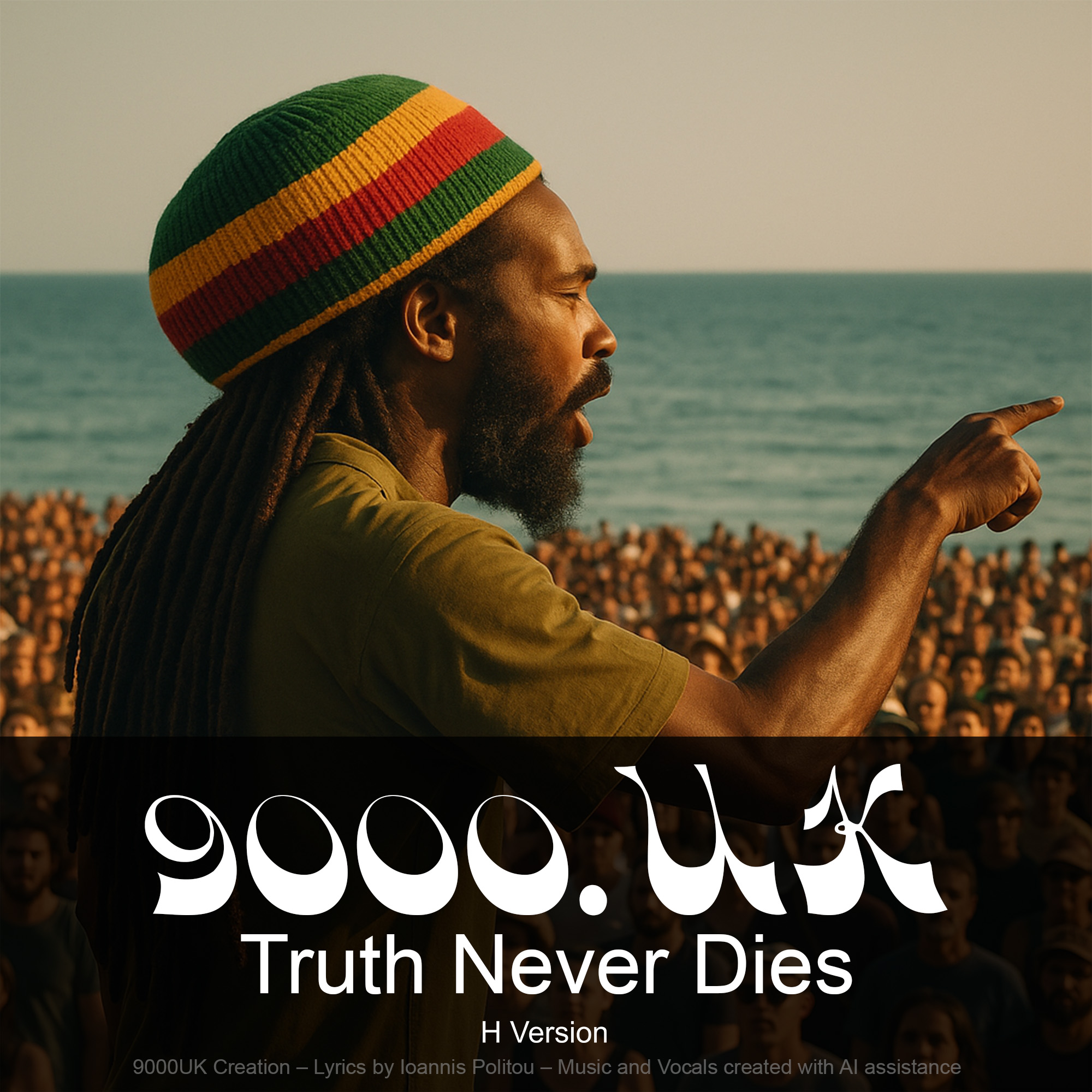
“Truth Never Dies” is a roots reggae anthem affirming truth as an unbreakable force, declaring that despite lies, manipulation, and collapsing power, truth endures across generations.
“Truth Never Dies” is a conscious roots reggae track grounded in spiritual resilience, historical memory, and moral clarity. The song positions truth as a living force—older than systems, stronger than deception, and impossible to erase—no matter how often it is challenged, rewritten, or suppressed.
The intro establishes certainty and ritual. Truth is repeated like a chant, rising “like the morning sun,” framing it as natural, inevitable, and renewing. From the outset, the song contrasts fleeting whispers and propaganda with permanence, urging listeners to open their eyes and remain grounded.
Verse 1 introduces Babylon as the voice of manipulation—sweet-tongued promises offered in darkness. Daylight becomes a symbol of exposure, revealing lies once they are tested by truth. The narrator responds not with anger, but with steadiness, choosing inner alignment over confusion. Truth is described as fire in righteous skies, suggesting both purification and strength.
The pre-chorus reinforces endurance. Even when narratives are twisted and pressure increases, truth is personified as a lion—visible, unafraid, and impossible to hide. This imagery roots the song firmly in reggae’s tradition of spiritual resistance.
The chorus delivers the song’s central declaration. Storms, collapsing kingdoms, and shaking mountains symbolise political, social, and ideological upheaval, yet truth remains unmoved. By linking elders and youth, ancient times and present voices, the song frames truth as generational—passed down through culture, chant, and lived memory.
Verse 2 deepens the historical dimension. Attempts to rewrite the past are rejected, as roots culture remembers every song, every injustice, and every lesson. Elders and mountains become guardians of wisdom, reinforcing that truth is not owned by institutions, but preserved by people, land, and collective memory. Truth as a river connects justice with continuity—always flowing forward.
The repeated chorus and extended chant strengthen the communal feel, turning the song into affirmation rather than argument. Repetition becomes power, echoing how truth survives through persistence rather than volume.
The outro closes with unity and grounding. “Roots man rise” signals collective responsibility, while the deep rumble of wisdom suggests truth lives beneath the surface, waiting rather than vanishing.
Overall, “Truth Never Dies” is a roots reggae statement of conviction and calm defiance. It rejects manipulation without panic and confronts falsehood without surrender, reminding listeners that truth does not need defending through force—it survives through time, memory, and unwavering presence.