
Discography Trap

Discography Trap
Explore Trap music by 9000UK, driven by heavy bass, rhythm, and modern production.
Trap Music by 9000UK
This Trap discography by 9000UK centres on heavy 808s, sharp hi-hats, and modern rhythmic patterns. The tracks balance energy and control, with vocals and hooks placed for impact. Themes vary while production remains focused and current.
Stolen Country
A dark, introspective track about exile and betrayal, portraying a lone journey through loss, distrust, and emotional detachment after a homeland collapses into corruption.
“Stolen Country - Cold Roads” delivers a stark and unfiltered portrayal of displacement, political disillusionment, and emotional isolation. Set against a dark trap backdrop, the song uses cold, minimal imagery to reflect a world stripped of warmth, trust, and belonging. The narrative centres on forced separation from a homeland that has lost its integrity, leaving the individual in a state of constant movement without direction or refuge.
The intro establishes an immediate sense of emptiness and deprivation, with “cold air” and “no light” symbolising both physical and emotional darkness. The absence of “home” and “right” introduces themes of injustice and exclusion, while the phrase “alone in the night” frames the journey as solitary and ongoing.
In the first verse, the departure from the homeland is presented as irreversible, marked by systemic collapse and moral decay. Lines such as “truth got buried, power rose” and “nobody cares, everyone knows” highlight a collective awareness of corruption paired with inaction. The loss of hope is direct and final, described as something that was actively destroyed. Trust, once foundational, is completely eroded, leaving the narrator disconnected from both institutions and individuals.
The pre-chorus intensifies the emotional state, shifting from external observation to internal impact. Physical reactions such as shaking and numbness reflect trauma and instability, while the admission of not belonging anywhere reinforces the theme of identity loss.
The chorus acts as the emotional core, repeating the isolation of travelling alone and the absence of any place to call home. The phrase “a land that forgot its soul” suggests a deeper cultural and moral collapse, while “roads that lead to cold” extends the metaphor of emotional emptiness into the physical journey. Carrying unseen pain adds depth to the character, indicating internal struggle beneath outward movement.
The second verse expands the critique toward leadership and systemic exploitation. Politicians are depicted as deceptive and self-serving, with “taking all, giving none” summarising imbalance and neglect. The consequences are shown through broken families and lost futures, grounding the broader critique in human impact. The repetition of selfish gain built on “silent pain” reinforces the idea of suffering that is both widespread and ignored.
The final pre-chorus continues the descent, with imagery of instability and lack of safety. The absence of any place to settle confirms that the journey is not temporary but a new reality.
The outro strips everything back to its bare essentials: “No roots, no base, just time and space.” This reduction reflects complete detachment from identity, place, and stability. The repetition of movement without destination reinforces a sense of endless drift, closing the track without resolution.
Overall, the song presents a raw and grounded exploration of exile, distrust, and survival in the aftermath of systemic failure. The tone is cold, heavy, and introspective, capturing the psychological weight of losing both homeland and identity while continuing forward with no clear end.

Echoes Of Truth
A confrontational rap about truth and loyalty, demanding honesty in how stories are told and calling out selective narratives that distort real actions and relationships.
“Echoes of Truth - Respect the Full Story” by 9000UK is a direct and emotionally charged rap focused on truth, loyalty, and the consequences of distorted narratives. The song explores the frustration of being misrepresented by others who selectively retell events to suit their own image, while ignoring the full reality of past actions and support.
The introduction establishes the core theme with a clear statement: truth should be spoken in full, not in fragments. This sets the tone for a track built on confronting half-truths, omissions, and manipulated perspectives.
In the first verse, the narrator reflects on a relationship where loyalty and support were once central. Moments of sacrifice, emotional presence, and genuine care are contrasted with the present situation, where those same actions are either ignored or rewritten. The imagery of “cuts and edits” suggests a deliberate shaping of narrative, similar to how media or storytelling can be manipulated to create a desired impression. This highlights the tension between reality and perception.
The pre-chorus introduces a key idea that truth is resilient. No matter how much pressure is applied or how narratives are altered, truth remains intact and eventually surfaces. This reinforces the song’s confidence in authenticity over distortion.
The chorus delivers the main message with clarity and repetition. The narrator demands that their story be told in its entirety, including both struggles and achievements. The emphasis on completeness challenges selective memory and biased retelling. By calling out the removal of positive contributions, the song highlights how narratives can be weaponised to shift blame or gain sympathy.
In the second verse, the tone becomes more reflective but equally firm. The narrator describes being a source of strength during difficult times, only to be later misrepresented. The transformation of real experiences into “empty ploys” reflects how genuine moments can be repurposed for attention or validation. Despite this, the narrator maintains a sense of self-awareness and confidence, asserting that the truth remains known beneath the surface.
The second pre-chorus reinforces the idea that facts do not fade or weaken over time. Regardless of how they are hidden or altered, truth eventually finds its way into the light.
The repeated chorus strengthens the central demand for honesty and accountability. It emphasises that identity and reputation should not be shaped by incomplete or biased storytelling.
The outro concludes with a final statement about integrity. Truth is presented as a path to healing, suggesting that honesty not only restores personal dignity but also resolves conflict and misunderstanding.
Overall, “Echoes of Truth - Respect the Full Story” serves as a powerful statement on authenticity, fairness, and the importance of telling complete stories. Through direct language and personal reflection, the song challenges distorted narratives and reinforces the lasting strength of truth.
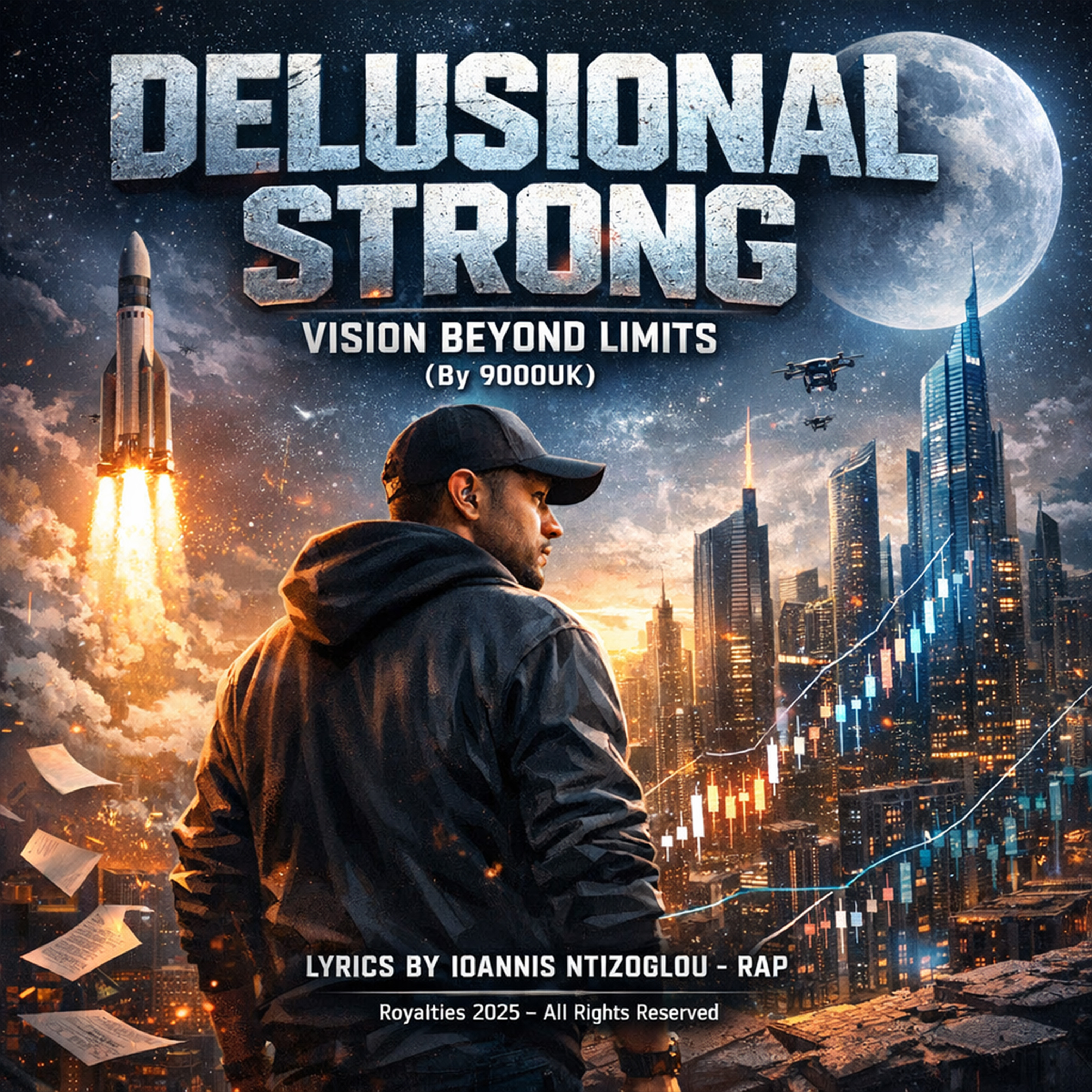
Delusional Strong
A defiant rap anthem about embracing bold vision and being labelled delusional for thinking bigger, refusing limits, and turning doubt into disciplined execution and long-term success.
Delusional Strong - Vision Beyond Limits positions ambition as rebellion. The song centres on the tension between external doubt and internal certainty, where being called delusional becomes proof of forward thinking. From the opening lines, oversized dreams and “vision unusual” set the tone. Time keeps ticking, improvement continues, and ridicule fuels momentum rather than stopping it.
The first verse contrasts two mindsets. One chooses safety, silence, and small thinking. The other sees opportunity in walls, ignition in noise, and targets in what others dismiss as fantasy. Skyline imagery suggests expansion and scale, while rising numbers on a screen anchor the vision in measurable progress. Tactical mapping and carving out a personal lane show strategy rather than blind optimism.
The pre-chorus highlights social resistance. Being “lost in your head” reflects how unconventional thinking unsettles people anchored to the present. Yet fear holds no authority. The vision remains loud and clear.
The chorus reframes the insult. Delusional becomes a badge of independence. Dreaming in code signals calculated ambition in a digital age, where execution matters more than commentary. Refusing to fold marks resilience, while choosing the harder road signals ownership of risk.
Verse two sharpens the argument. Statistics, limits, and comfort zones lose power against scale thinking. Planting flags on distant moons symbolises expansion beyond conventional boundaries. Observers scroll and analyse. The protagonist executes and produces receipts. Results outweigh opinions.
The outro anticipates delayed recognition. What is mocked today becomes vision tomorrow. Until then, movement continues with intention and conviction. The emotional tone is assertive, strategic, and controlled, portraying confidence not as ego, but as disciplined belief sustained under pressure.

Die Young As Late As Possible
A trap anthem about longevity, discipline, and legacy, reframing the idea of dying young by focusing on calculated living, long term vision, and building a life that outlasts time.
“Die Young as Late as Possible - Trap Anthem” reframes mortality through discipline, patience, and intentional living. The lyrics challenge the glorification of fast burnout, instead presenting longevity as strength and foresight. Life appears as a timeline shaped through decisions, resilience, and strategic risk rather than impulse.
The narrative follows a philosophy of controlled intensity. Scars and lessons mark experience, while calculated moves and long term planning define progress. The artist balances ambition with awareness of time, showing how discipline preserves momentum and protects legacy. Living fully does not mean rushing toward collapse, it means managing energy, risk, and purpose.
The chorus reinforces the central message. Legacy grows through consistency, memory, and impact rather than speed. Stacking years alongside dreams and obstacles highlights endurance as the true measure of success. The phrase “die young as late as possible” becomes a paradox expressing commitment to vitality, growth, and lasting presence.
Symbolism throughout the track strengthens this theme. Timelines, racks, and chronicles represent accumulation and permanence. Fire in the heart reflects motivation, while brakes and calculated risks signal control and awareness. The contrast between youth and age suggests a mindset that blends ambition with wisdom.
Emotionally, the tone carries confidence, focus, and reflective pride. The artist recognises mortality while asserting control over how life is lived and remembered. Longevity becomes an act of defiance against chaos and impulsive self destruction.
The song ultimately presents life as a strategic journey where discipline, timing, and intention shape both identity and legacy. It positions endurance as power, framing longevity as the path to lasting influence and meaning.

Respect Reflects Me
A trap anthem about integrity and self defined respect, showing how character, discipline, and emotional control shape identity regardless of how others behave.
“Respect Reflects Me - Trap Anthem of Character” centres on respect as an internal code rooted in identity rather than a reaction to others. The lyrics position dignity, restraint, and consistency as markers of strength, where behaviour remains steady even in the face of hostility, disrespect, or ego driven conflict.
The narrative follows a stance of emotional control and moral clarity. Insults, judgement, and pressure appear throughout the verses, yet the response stays grounded in calm and self awareness. Respect becomes a personal standard rather than a reward earned by others, shifting power away from external validation toward inner discipline.
The chorus reinforces this perspective by framing respect as a reflection of character. The artist maintains composure regardless of provocation, using love, restraint, and self belief as protection. Emotional strength appears in the refusal to mirror negativity, preserving peace and direction while navigating conflict.
Symbolism throughout the track supports this identity driven approach. Crowns, mirrors, and kingdoms represent self ownership and long term legacy. Stones and diamonds treated equally emphasise fairness and principle over status. The idea of building brick by brick reflects steady development of character rather than pursuit of clout or recognition.
Emotionally, the tone carries firmness, confidence, and composure. The track rejects performative dominance, instead positioning respect as a quiet form of authority. Love, discipline, and self control function as tools for navigating confrontation without losing direction.
The song ultimately frames respect as a lifelong code shaping behaviour, relationships, and identity. Character emerges as the foundation of power, where integrity and consistency define strength and guide the individual from beginning to end.

Interloping
A dark trap anthem about moving unseen through hostile territory, infiltrating power structures, and using stealth, strategy, and sound to disrupt empires from within.
Interloping - shadow moves in the trap zone builds its identity around infiltration, secrecy, and controlled dominance. The song frames the protagonist as an outsider who steps into restricted spaces without invitation, driven by instinct, rhythm, and precision. From the opening lines, tension is established through low light, elevated heartbeat, and a city that feels alive yet unaware.
The first verse paints an urban network of concrete veins and whispered secrets. The speaker moves like a glitch in a system, disrupting plans and leaking through cracks in the structure. Being faceless and nameless reinforces anonymity as strength. Identity becomes coded, strategic, and detached. The trap zone is not only a physical space but a metaphor for guarded power systems where only certain figures are meant to operate.
The pre-chorus highlights risk. Crossing lines without passes or stamps emphasises transgression. Time ticking in the background adds urgency, while bass becomes a shield that pushes fear away. Sound itself functions as armour.
The chorus repeats the image of the shadow weakening empires. Smoke, glass, and midnight heat create a cinematic atmosphere of tension and stealth. Kings do not meet in these spaces, suggesting hidden corridors of influence. The repeated phrasing mirrors persistence and calculated movement, reinforcing the methodical nature of the infiltration.
Verse two intensifies the danger. The lion’s den imagery signals predatory territory where mistakes carry consequences. Yet the protagonist thrives under pressure, converting fire into fuel. Lockpick beats and coded access replace physical keys, blending music with subversion.
The outro confirms the philosophy. The infiltration is complete before detection. Fate itself becomes something to penetrate and alter. Emotionally, the track is cold, focused, and strategic, presenting dominance not through brute force but through precision, patience, and controlled disruption from within the shadows.

Squatting
A rebellious trap anthem about occupying abandoned spaces, rejecting authority, and turning empty buildings into symbols of unity, resistance, and underground identity.
Squatting - street takeover anthem presents occupation as defiance and community-building as resistance. The song frames squatting not as survival alone but as a statement of autonomy, where unused spaces become stages for identity and collective power. From the opening chant, ownership is redefined. No rent, no lease, no permission. Presence itself becomes the claim.
The first verse paints a raw urban setting. Night shadows, picked locks, peeled paint, and candlelight create an atmosphere of grit and improvisation. Yet the tone is not defeated. The abandoned structure transforms into a castle, and hierarchy is rejected with “no kings allowed.” The imagery flips neglect into empowerment.
The pre-chorus introduces tension with eviction threats and authority, but flags planted in empty space symbolise reclaiming territory. The city is portrayed as contested ground. From basements to rooftops, the crew asserts belonging through occupation and shared energy.
The chorus frames squatting as construction rather than destruction. “Take the space, make it home” signals transformation. Beats and stone merge music with architecture, suggesting culture is built inside physical walls. Living free and loud becomes an act of permanence, reinforced by cementing names in the underground.
Verse two deepens the street realism. Mattresses on floors and broken glass contrast with dreams and creative expression. Spray paint becomes voice. Each mark on the wall acts as testimony. The presence of neighbours and police hints at surveillance and pressure, yet the group remains steady, looping like a beat that refuses to stop.
The outro expands the idea into philosophy. Any unused structure becomes potential life. Freedom exists through sound and shared creation. Emotionally, the track is confrontational, communal, and unapologetic, presenting underground living as a symbol of resistance, unity, and self-determined identity.

Life Does Not Get Easier You Get Stronger
A hard-edged trap anthem about turning pain, setbacks, and pressure into resilience, showing that life does not soften, you strengthen through struggle, discipline, and relentless self-belief.
Life Does Not Get Easier You Get Stronger - motivational street grind is built around a central truth: adversity does not disappear, it forges you. The track frames life as constant pressure, where growth comes through endurance rather than relief. From the opening lines, pain is positioned as a training ground. Muscles grow under strain. Control is learned through impact.
The verses trace a journey from vulnerability to hardened resilience. Setbacks become lessons. Tears convert into fire. Darkness without light symbolises isolation and uncertainty, yet walking through it builds force. There are no shortcuts or cheat codes. The street imagery reinforces a survival mindset where bruises become medals and losses sharpen ambition. Each scar becomes evidence of adaptation rather than defeat.
The pre-chorus sharpens the philosophy. Life does not soften. It becomes real. You do not receive breaks or peace. You develop steel and will. The repeated climb uphill metaphor emphasises effort as a permanent condition, not a temporary phase.
The chorus intensifies the transformation. Hits extend endurance. Storms deepen roots. The line about carrying weight alone highlights independence and responsibility. Loss converts a boy into a soldier, marking emotional evolution from fragility to discipline. Coldness here signals emotional control rather than emptiness.
Verse two deepens the internal struggle. Invisible cuts shape character. Private prayers represent moments of doubt, yet survival becomes proof of strength. The backbone built from stone symbolises self-ownership and unbreakable identity.
The outro reframes pain as a teacher and strength as the result earned. Falling sharpens the blade. Life refuses to bend, so the speaker breaks the chain instead. The emotional tone is intense, determined, and uncompromising, presenting resilience as a choice reinforced daily through grind and self-mastery.

Stop Worrying
A motivational trap anthem urging you to stop wasting energy on what you cannot control and instead focus on disciplined action, small wins, and building a stable future through self-control and steady growth.
Stop Worrying - self-control and focus presents a mindset shift framed through sharp, practical metaphors. The song centres on the tension between anxiety over uncontrollable forces and the power found in disciplined action. It speaks directly to you, confronting the habit of fighting “ghosts” and wasting energy on storms you cannot ignite or silence.
The imagery is grounded in construction, navigation, and agriculture. Bricks stacked in a line, sails adjusted to the wind, seeds watered, and castles built with lasting walls all symbolise structured, intentional effort. These visuals replace chaos with order. The repeated idea that you cannot fix the wind but you can fix your sail reframes adversity. External conditions stay unpredictable, yet your response stays within reach.
Emotionally, the track moves from tension to clarity. The weight on your chest and the shadow fights represent internal stress created by imagined threats or irreversible past events. The chorus acts as a command. Put your hands on the tools that exist. Let the rest drift out like mist. Build the now. The message is not denial of hardship. It is disciplined redirection.
Verse two sharpens the philosophy. You cannot heal the world in one night. You should not pour your heart into battles that yield nothing. Instead, the song promotes small, consistent wins as the foundation of long-term authority and growth. Energy is framed as currency. Spend it poorly and you weaken your future. Invest it wisely and you construct something durable.
The overall tone is firm but constructive. It functions as both self-talk and instruction, encouraging emotional restraint, focus, and strategic patience. Growth comes from the seeds you sow, not from worrying about uncontrollable tides.