
Discography

Discography
Browse the complete 9000UK discography, featuring original music across multiple genres. This catalogue includes experimental works, genre-blending tracks and evolving creative releases.
Full Music Catalogue
- All
- AbsurdCore
- Afrobeats
- Amapiano
- Ambient
- Ballad
- Blues
- Calming Music
- Christian
- Classical
- Country
- Dance
- Dark
- Dark Electronic
- Dark Trap
- DUB
- Easy Listening
- Electronic
- Experimental Pop
- Folk
- Funk
- Gospel
- Gospel Blues
- Greek Music
- Grime
- Hip-Hop
- Hyperpop
- Indie
- J-Pop
- Jazz
- Just Music
- Lo-Fi
- Love Song
- Metal
- Minimal Techno
- Orchestral
- Pop
- Punk
- R&B
- Rap
- Reggae
- Relaxing
- Rock
- Soft Rock
- Soul
- Spiritual
- Stress Relief
- Trap

Christ Is Risen
A deeply spiritual hymn celebrating the Resurrection of Christ, expressing eternal light, victory over death, and the renewal of faith through divine truth and salvation.
“Christ Is Risen - Χριστός Ανέστη - Φως Αιώνιο” is a reverent and devotional composition rooted in Orthodox Christian tradition, centred on the Resurrection as the ultimate triumph of life over death. Drawing directly from liturgical language and sacred hymns, the song blends ancient Greek expressions with modern structure to create a timeless act of worship and reflection.
The intro invokes the Trisagion prayer, “Άγιος ὁ Θεός…,” immediately grounding the piece in sacred ritual and divine reverence. This repetition establishes a solemn atmosphere, inviting the listener into a spiritual space of humility, awe, and connection with the divine presence.
In the first verse, the imagery of God dwelling in “unapproachable light” and bringing forth light from the tomb reflects the core theological message of the Resurrection. Darkness, symbolised by the tomb, is overcome by divine illumination, representing both physical resurrection and spiritual awakening. The prayerful tone, asking for hearts to be enlightened and made worthy to glorify the Resurrection, reinforces themes of humility, devotion, and transformation.
The pre-chorus introduces a personal dimension, where truth is described as an eternal flame within. This bridges the divine and the human, suggesting that the Resurrection is not only a historical or theological event but an ongoing internal experience of faith and truth.
The chorus draws directly from the Paschal troparion, one of the most recognisable hymns in Orthodox Christianity. Its repetition of “Χριστός ανέστη εκ νεκρών” emphasises the central proclamation of the faith, while “θανάτω θάνατον πατήσας” conveys the paradox of death being defeated through death itself. The line “ζωήν χαρισάμενος” highlights the gift of life extended to all, reinforcing themes of salvation and eternal hope.
In the second verse, the transition from night to dawn symbolises resurrection and renewal, both spiritually and metaphorically. The rising voices and the call of the heavens create a sense of collective worship and unity, while faith is presented as a guiding force leading believers forward.
The bridge introduces the call “Δεῦτε λάβετε φῶς,” a central moment in the Resurrection service where light is shared among the faithful. This act symbolises the transmission of divine light and truth, reinforcing the communal and enduring nature of faith. The idea that this light remains in the heart and never fades underscores the permanence of spiritual transformation.
The outro returns to the theme of eternal light and the living presence of the Resurrection. The repetition of sacred phrases reinforces continuity, devotion, and reverence, closing the piece in a state of spiritual affirmation.
Overall, the song functions as both a musical interpretation of Orthodox liturgy and a contemporary expression of faith. It conveys themes of resurrection, redemption, eternal light, and victory over death, maintaining a tone that is solemn, uplifting, and deeply reverent.

Tetarti Prosefxi
A gospel rendering of Psalm 135 paired with the Trisagion Hymn, offering praise and thanksgiving for God’s eternal mercy and creative power.
“Tetarti Prosefxi (Ψαλμός 135: Εξομολογείσθε τῷ Κυρίῳ)” is a devotional composition structured around the Trisagion Hymn and the opening verses of Psalm 135. The piece centres on thanksgiving, divine mercy, and recognition of God as creator and sovereign over all things.
The repeated invocation “Ἅγιος ὁ Θεός” frames the composition in reverence and humility, calling upon divine holiness, strength, and immortality while seeking mercy. This liturgical refrain establishes a sacred tone before transitioning into the psalm of praise.
Psalm 135 unfolds as a rhythmic proclamation of gratitude. Each line affirms that God is good and that His mercy endures forever, creating a powerful pattern of repetition that reinforces eternal compassion and faithfulness. The verses highlight divine creation, from the heavens and the earth to the sun, moon, and stars, presenting God as architect of the cosmos and ruler of time, day, and night.
The recurring “Ἀλληλούια” intensifies the spirit of praise, transforming the text into a communal declaration of joy and worship. The repetition of mercy as everlasting anchors the theological focus on steadfast love as the defining attribute of God.
The return of the Trisagion at the end completes the liturgical cycle, bringing the prayer back to its foundation of holiness and supplication. The structure moves from reverence to thanksgiving and back to reverence, mirroring traditional worship patterns.
Emotionally, the tone carries exaltation, gratitude, and spiritual assurance. The composition emphasises divine constancy, creative authority, and enduring mercy, presenting praise as both acknowledgement of creation and affirmation of faith in God’s eternal presence.
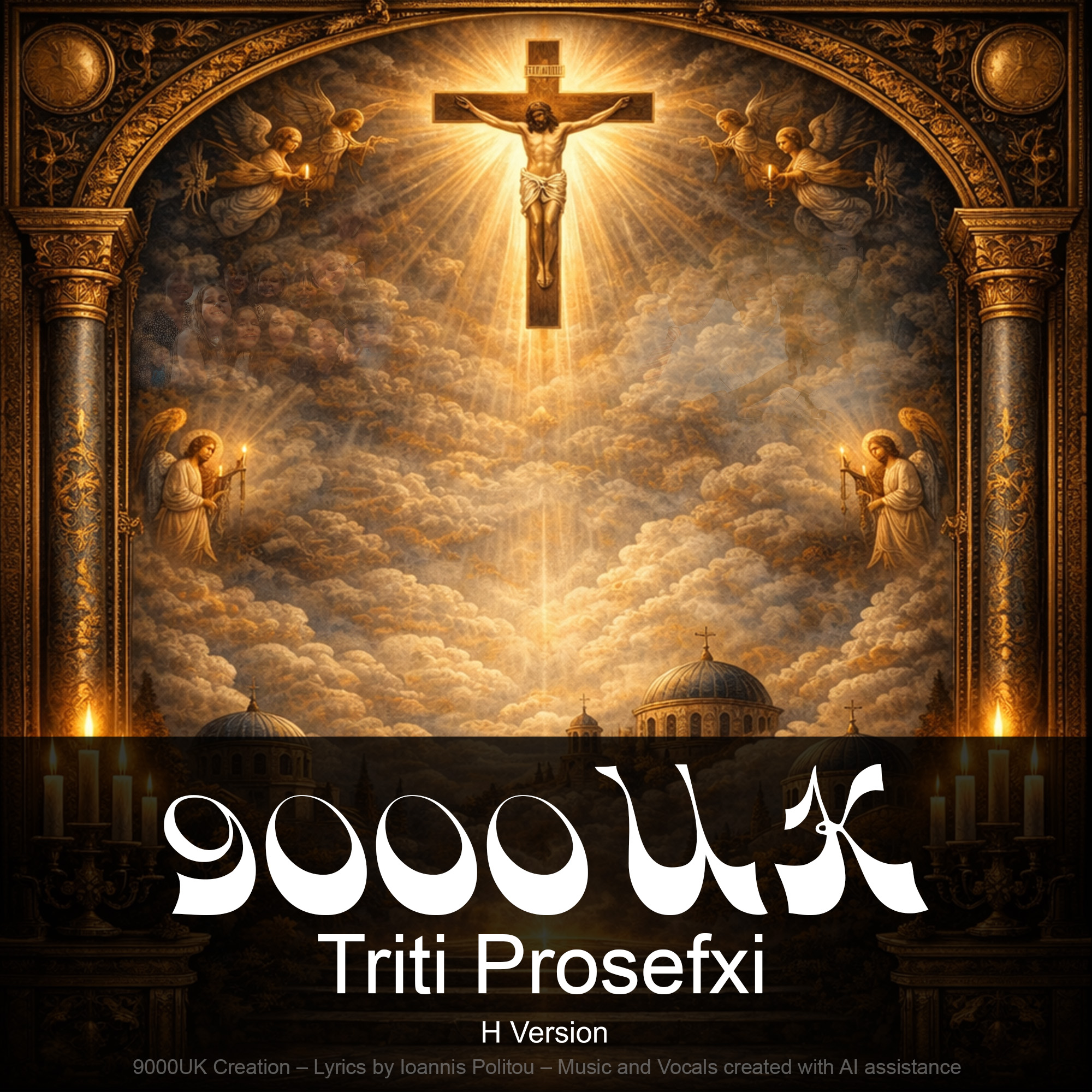
Triti Prosefxi
A gospel adaptation of the Trisagion Hymn and the Nicene Creed, expressing faith, worship, and doctrinal belief through traditional Orthodox liturgical prayer.
“Triti Prosefxi (Πιστεύω) - Gospel” presents a devotional composition built around two central pillars of Orthodox worship, the Trisagion Hymn and the Nicene Creed. The structure follows a liturgical progression of praise, proclamation of belief, and reaffirmation of faith, creating a solemn and reverent spiritual atmosphere.
The opening repetition of “Ἅγιος ὁ Θεός” establishes a foundation of worship centred on divine holiness, strength, and immortality, combined with a plea for mercy. This recurring invocation frames the composition in humility and reverence, preparing the transition into the confession of faith.
The core of the piece is the Nicene Creed in its original Greek form, articulating foundational Christian doctrine. Themes include belief in one God as creator, the divinity and incarnation of Jesus Christ, the crucifixion and resurrection, and the promise of return and eternal kingdom. The text continues with affirmation of the Holy Spirit, the unity of the Church, baptism for forgiveness, and hope in the resurrection and life of the age to come. Each section forms a structured declaration of theological identity and spiritual conviction.
The return of the Trisagion following the creed reinforces devotion and continuity, linking belief with worship. The cyclical movement between praise and proclamation reflects communal liturgical practice and spiritual reaffirmation.
Emotionally, the tone carries solemnity, reverence, and conviction. The composition emphasises unity of faith, continuity of tradition, and commitment to spiritual truth. Through sacred language, repetition, and doctrinal clarity, the piece presents prayer as both personal affirmation and collective declaration within the framework of Orthodox belief.

Defteri Prosefhi
A gospel interpretation of the Trisagion Hymn and “Axion Estin,” expressing reverence for God and honour for the Theotokos through traditional Orthodox prayer and devotion.
“Defteri Prosefhi (Aksion Estin - Ἄξιόν ἐστιν) - Gospel” is a devotional composition grounded in Orthodox liturgical tradition, combining the Trisagion Hymn with the hymn “Άξιον εστίν.” The structure follows a prayerful progression of praise, veneration, and spiritual affirmation, creating a reflective and reverent atmosphere rooted in worship.
The repeated invocation “Ἅγιος ὁ Θεός” establishes a sacred foundation, emphasising divine holiness, strength, and immortality while calling for mercy. This repetition functions as both a spiritual focus and a communal expression of faith, guiding listeners into contemplation and humility.
The central section introduces “Άξιον εστίν,” a hymn honouring the Theotokos as blessed, pure, and the bearer of the Word. The lyrics elevate her role through imagery of reverence and sanctity, placing her above cherubim and seraphim in honour. The hymn highlights themes of purity, divine motherhood, and spiritual intercession, reinforcing her significance within Orthodox belief and devotion.
The return to the Trisagion reaffirms praise and unity, closing the composition within a cycle of reverence and supplication. The repeated “Ἀμήν” seals the prayer, symbolising agreement, faith, and completion.
Emotionally, the tone carries solemn devotion, humility, and spiritual reverence. The composition emphasises continuity with tradition, presenting prayer as both personal offering and communal act of worship. Through sacred language and repetition, the piece invites reflection, honour, and connection to the foundations of Orthodox faith.

Proti Prosefhi
A gospel adaptation of the Trisagion Hymn and the Lord’s Prayer, presenting reverence, devotion, and surrender through repeated praise and sacred liturgical text.
“Proti Prosefhi (Pater Imon - Πάτερ ἡμῶν) - Gospel” is a devotional composition built around the Trisagion Hymn and the Lord’s Prayer, structured as a reverent expression of faith, humility, and worship. The repeated invocation “Ἅγιος ὁ Θεός” establishes a meditative atmosphere rooted in Orthodox liturgical tradition, emphasising holiness, strength, and immortality of God.
The opening sections focus on praise and mercy, repeating the sacred refrain as a form of spiritual grounding. The repetition functions both musically and devotionally, reinforcing humility and collective supplication. The doxology that follows expands the prayer toward glorification of the Father, Son, and Holy Spirit, anchoring the piece in traditional Christian worship structure.
The central body presents the Lord’s Prayer in its original Greek form. Themes of sanctification, divine will, daily provision, forgiveness, protection from temptation, and deliverance from evil unfold in ordered progression. Each line reflects surrender to divine authority and trust in spiritual guidance. The prayer moves from praise to petition, then returns to glorification, completing a full liturgical arc.
The return of the Trisagion intensifies the devotional cycle, reinforcing reverence and communal unity. The repeated “Ἀμήν” at the conclusion functions as affirmation, sealing the prayer with conviction and collective agreement.
Emotionally, the tone carries solemnity, devotion, and spiritual focus. The composition emphasises humility, faith, and dependence on divine mercy. Through repetition and sacred language, the piece creates a contemplative atmosphere rooted in tradition and reverence, presenting prayer as both personal expression and communal worship.

Grace Do Not Quit on Me Hv
A Gospel Blues plea for enduring grace, portraying faith at its weakest point—where failure, exhaustion, and repeated missteps meet mercy that refuses to abandon the wounded soul.
“Grace Do Not Quit on Me” is a raw Gospel Blues confession that strips faith of confidence and replaces it with dependence. The song speaks from a position of spiritual fatigue, where strength is gone, resolve is fractured, and survival rests entirely on grace that continues despite repeated failure.
The opening verse establishes a cycle of wandering and return. The narrator admits to leaving the path “more times than I can count,” rejecting any illusion of steady righteousness. Grace is portrayed as active and pursuing—finding the narrator precisely when self-sufficiency collapses. Redemption here is not earned through improvement, but encountered at the point of depletion.
The chorus forms the emotional and theological centre. Grace is addressed directly, almost breathlessly, not as doctrine but as lifeline. The image of crawling through battle underscores total exhaustion—this is not heroic struggle, but survival-level faith. The plea “do not quit on me” reverses conventional language; the fear is not that the narrator will give up on grace, but that grace might finally give up on them.
Verse two deepens the honesty. Mercy has been tested, failure acknowledged without defence or excuse. The line “if You’re still with me / then I’m still all I have” carries a stark vulnerability—identity reduced to presence rather than performance. Faith narrows to a single question: is grace still here?
The outro resolves quietly, without triumph. There is no declaration of victory, only a request for continued presence—“stay,” “hold me.” The emotional tone is weary, intimate, and sincere. The song refuses polished repentance or confident assurance, offering instead a portrait of grace as patience itself—love that does not quit when the believer no longer has the strength to keep going.

Drenched in Glory Hv
A Gospel Blues testimony of transformation, where fire becomes love, regret is replaced by grace, and the soul is immersed in unearned glory through the gentle weight of divine presence.
“Drenched in Glory” portrays spiritual transformation not as escape from fire, but as redefinition of it. The song continues the Gospel Blues theme of refinement, presenting divine encounter as something immersive—something that covers, soaks, and reshapes identity rather than merely rescuing from harm.
The opening verse reverses expectation. Stepping from ashes into flame suggests a move deeper into vulnerability, yet the fire is revealed to be love, not fury. This reframing establishes the song’s central idea: what once symbolised destruction now signifies divine intimacy. The flames do not consume; they welcome.
The chorus introduces the language of saturation. Being “drenched” and “soaked” implies abundance and totality—glory is not measured or rationed. The “weight” of presence falling softly creates a striking contrast between heaviness and gentleness, suggesting a holiness that is powerful without being oppressive. Nighttime imagery reinforces constancy, portraying grace as something that remains when noise fades.
Verse two shifts the focus to identity. Regret is described as clothing once worn, now replaced by grace. This wardrobe imagery reinforces the transformation as visible, enveloping, and personal. The pouring of the Spirit evokes consecration and renewal, echoing biblical anointing while grounding it in lived experience.
The outro resolves the song’s theology with humility and assurance. The robe of glory is explicitly unearned, yet it “fits just right,” affirming belonging without merit. The emotional tone is peaceful, reverent, and quietly confident. Rather than dramatic triumph, the song settles into acceptance—glory not as spectacle, but as covering, presence, and home.

Carried Through Crimson Hv
A Gospel Blues redemption narrative depicting salvation through mercy and sacrificial blood, where the narrator is carried through guilt, shame, and spiritual flood into safety, cleansing, and restored belonging.
“Carried Through Crimson” is a Gospel Blues testimony centred on rescue rather than effort. The song portrays salvation as something enacted for the narrator, not achieved by them—a decisive act of mercy that intervenes where drowning would otherwise be inevitable.
The opening verse establishes total vulnerability. The narrator expects to be consumed by sorrow, yet is unexpectedly kept afloat by mercy. “Crimson” operates as a layered symbol—simultaneously blood, guilt, sacrifice, and consequence. Being “carried through” it implies both passage and protection: the stain remains present, but it no longer has the power to destroy.
The chorus reinforces this dynamic of grace. Repetition emphasises certainty rather than struggle. The journey is through “stains” and “flood,” not around them, underscoring that redemption does not deny the reality of sin or pain. Kindness becomes the lifting force, while “sacred blood” seals the outcome, framing salvation as both compassionate and covenantal.
Verse two intensifies the imagery by personifying guilt and shame as forces that actively pull the narrator under. The line “He walked on blood-red waters” fuses biblical miracle with crucifixion imagery, presenting Christ as sovereign over both chaos and sacrifice. Rescue here is deliberate and relational—“to bring me back again”—implying restoration rather than mere survival.
The outro distils the theology into a final assurance: there is no depth of sin and no intensity of stain beyond redemption. The emotional tone is reverent, relieved, and confident. Rather than dramatics or triumphalism, the song offers quiet certainty—faith anchored in being carried when standing was no longer possible.

Nothing Left but Worship Hv
A Gospel Blues surrender piece portraying worship as the final refuge when strength, support, and certainty disappear—an honest, wordless reaching toward God from the depths of loss and isolation.
“Nothing Left But Worship” presents worship not as celebration, but as last remaining ground when everything else has fallen away. Rooted in Gospel Blues realism, the song explores faith stripped of comfort, resources, and reassurance, revealing devotion that survives when practical hope is exhausted.
The opening verse dismantles external securities one by one—money, strength, laughter, time itself. This gradual erosion creates a landscape of emotional emptiness rather than sudden tragedy. The long nights suggest endurance rather than shock, framing worship as something discovered after resilience has been worn thin.
The chorus defines the song’s spiritual core. Worship here is reduced to its most honest form: no eloquence, no explanation, only a cry. The physical imagery of lifted hands from the valley reinforces both humility and persistence—faith reaching upward from below, trusting not in proximity but in being heard. God is portrayed not as visibly present, but as attentive, anchoring the act of worship in relationship rather than sensation.
Verse two deepens the isolation. Silence from friends and closed doors remove human recourse, yet an altar is still found “in the ache.” This reframes pain itself as sacred space, suggesting that worship does not require resolution—only availability. The altar is not built from answers, but from honesty.
The outro offers a quiet but profound conclusion. If worship is all that remains, it is declared sufficient. The emotional tone is restrained, reverent, and resolute. Rather than dramatic victory, the song affirms a minimalist faith—one that survives not because circumstances improve, but because devotion remains when nothing else does.